


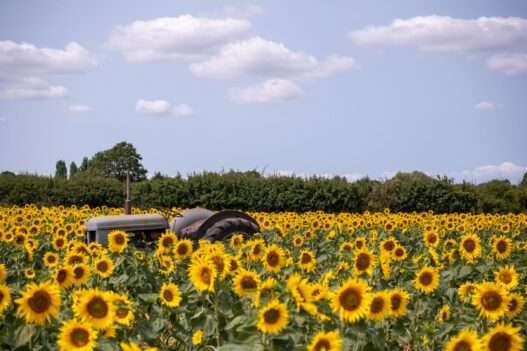
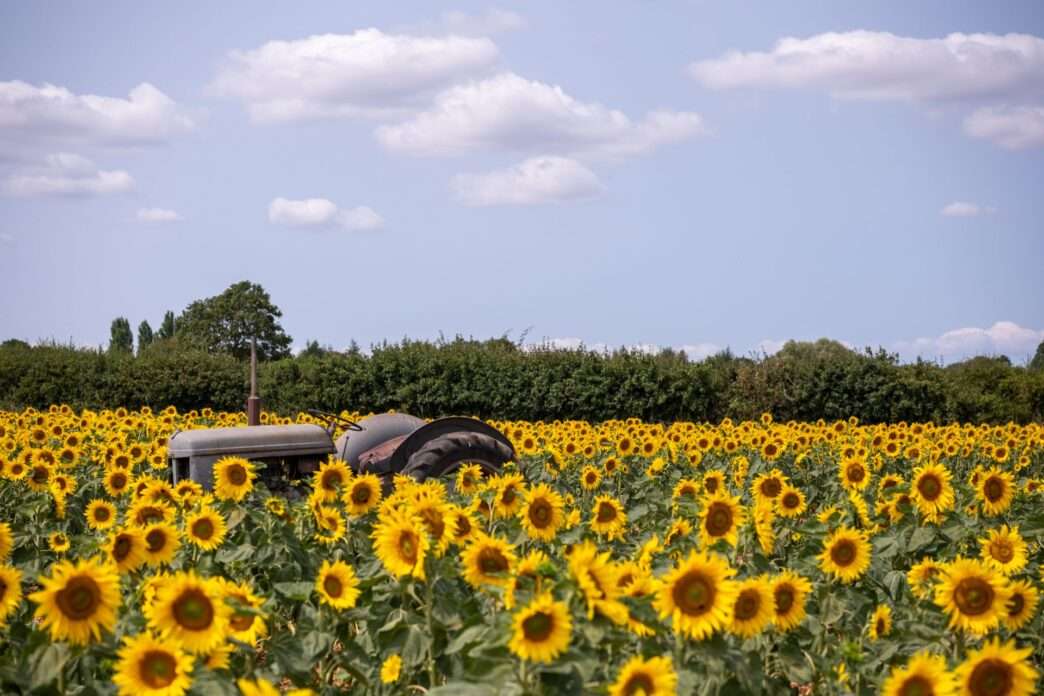
Sunflowers are the least subtle flower in North America. They grow taller than most adults, they turn their heads to track the sun through the morning, and when a few hundred thousand of them open at once the effect is closer to a stage set than a farm field. The catch is timing: peak bloom in most of these places lasts one to two weeks, and a field that looked electric on Tuesday can look tired and brown by the following weekend.
The ten fields below are the ones worth building a weekend around, spread from a roadside farm in Kansas to a hilltop conservancy outside Madison. Some charge admission and hand you shears; others are free, unstaffed, and rely entirely on visitors not trampling the rows.
1. Grinter Farms — Lawrence, Kansas
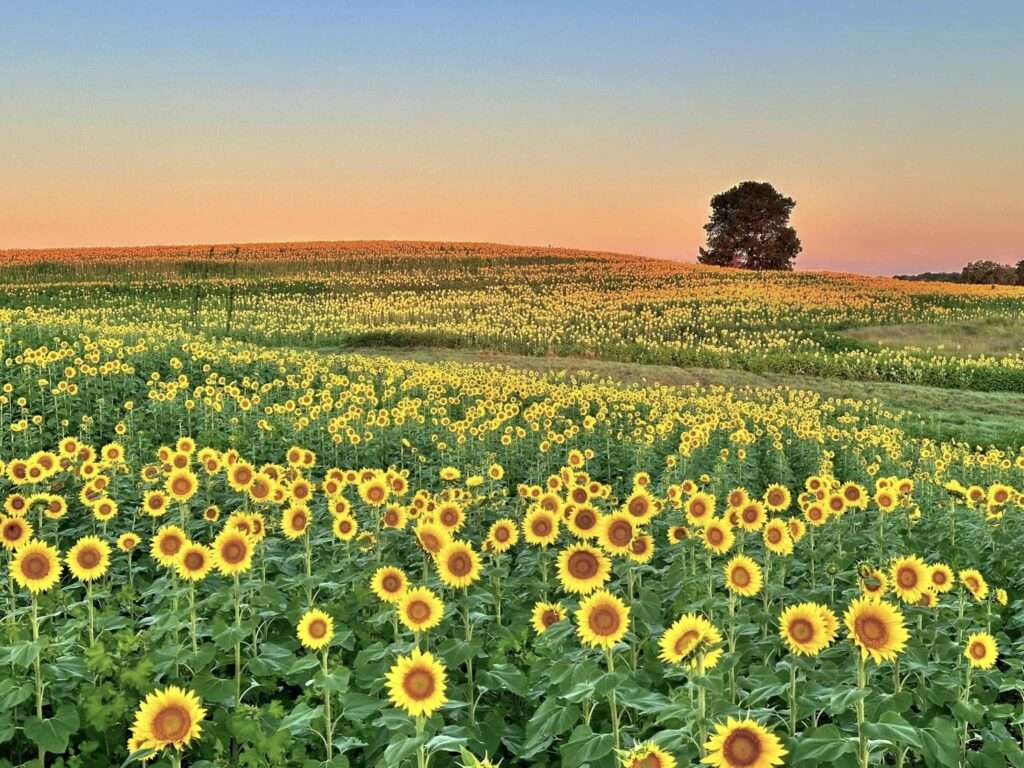
Kansas is literally the Sunflower State, and Grinter Farms is where that nickname stops being a license-plate slogan and turns into roughly 40 acres of blooms planted along a quiet stretch of Stillwell Road northeast of Lawrence. The Grinter family opens the field to the public free of charge for the couple of weeks it peaks, which usually lands in late August into the first week of September, and they post bloom updates rather than making you guess. Go on a weekday morning if you can, because weekend afternoons bring a genuine traffic jam of cars parked along a gravel shoulder with no shade anywhere in sight.
What to Pack to Visit Grinter Farms
- Broad-spectrum SPF 50+ sun stick — Reapply on your face and ears with dusty hands and zero mess, which a bottle can’t manage in an open field.
- Packable wide-brim sun hat with ponytail opening — Rolls flat in a bag and fixes the problem of every photo showing a squint.
- Compact 16MP digital camera with 5x optical zoom — Gives you real separation between one flower head and the field behind it, which a phone lens flattens.
Disclosure: This post contains Amazon affiliate links. I earn a small commission at no extra cost to you.
2. McKee-Beshers WMA — Poolesville, Maryland
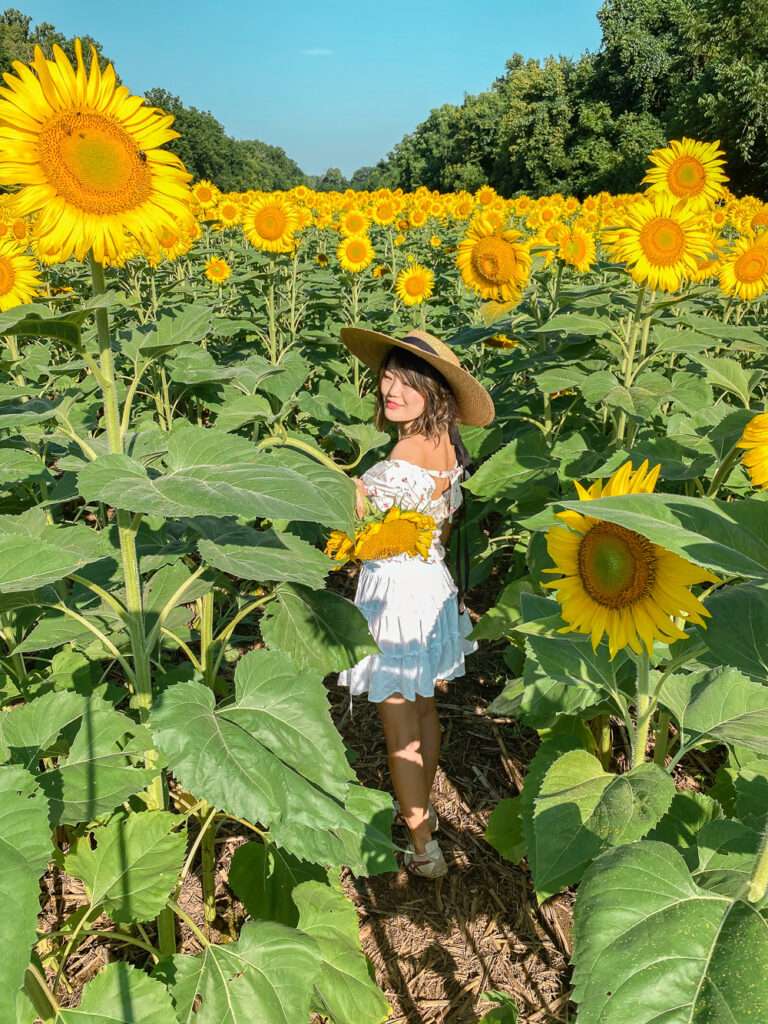
Maryland’s Department of Natural Resources plants sunflowers at McKee-Beshers Wildlife Management Area as dove habitat, not as an attraction, which is exactly why it feels so different from a ticketed farm — there’s no gate, no shop, and no one telling you where to stand. Several separate plots sit off River Road roughly an hour from DC, and they typically hit peak in mid-to-late July, a full month before the Midwest fields. The tradeoff for all that freedom is real: the walk-in trails run through low, damp bottomland along the Potomac, and the mosquitoes here are not a rumor.
What to Pack to Visit McKee-Beshers WMA
- Midweight cushioned hiker socks — The approach paths are uneven and often muddy, and these save your heels on the walk back to the car.
- Pocket-sized 20W power bank — No cell tower does you any favors out there, so this keeps your map and camera alive through a two-hour wander.
- Anti-chafe cream — Sounds like overkill right up until mile three in wet July heat across multiple plots.
3. Pope Farm Conservancy — Middleton, Wisconsin
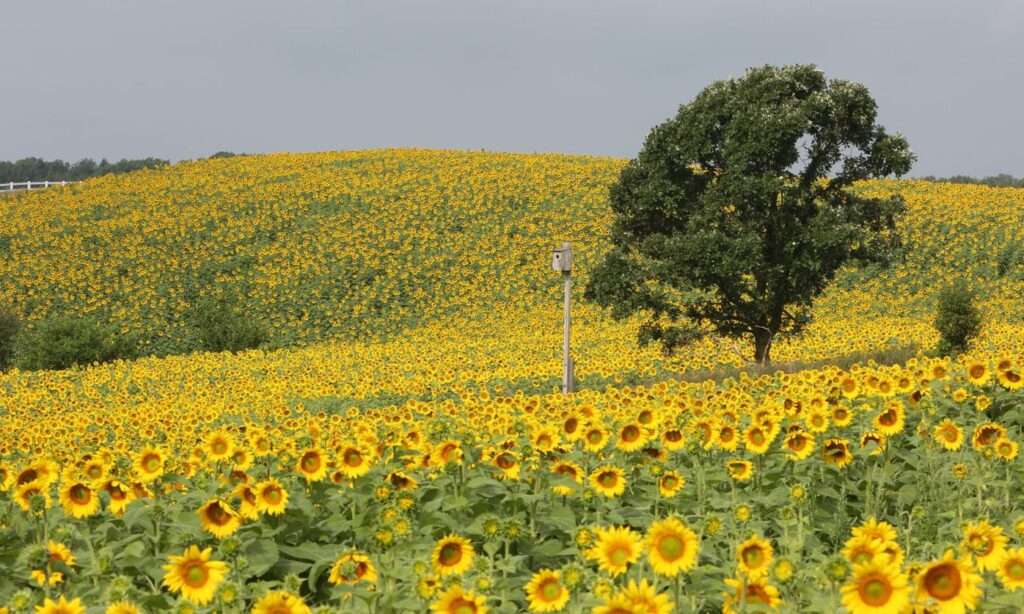
Pope Farm Conservancy sits on glacial drumlins just west of Madison, and its sunflower field is planted near the top of one — meaning you look across the blooms toward the Wisconsin countryside instead of just into a wall of stems. The conservancy runs a short, well-organized Sunflower Days window in late July or early August, with volunteers, mowed paths, and a shuttle system that keeps the whole thing from turning into chaos. Sunset is the move here, and it is also the windiest hour of the day on an exposed ridge with nothing to break it.
What to Pack to Visit Pope Farm Conservancy
- 75-inch lightweight travel tripod — A hilltop at golden hour lets you shoot into low light without pushing your ISO into mush.
- Flyaway-smoothing hair wand stick — Ridge wind undoes your hair in about nine seconds, and this quietly improves every photo taken after 6 p.m.
- Fragrance-free hydrating face mist — Resets a face that’s been sunburnt-adjacent and wind-dried for two hours straight.
4. Burnside Farms — Nokesville, Virginia
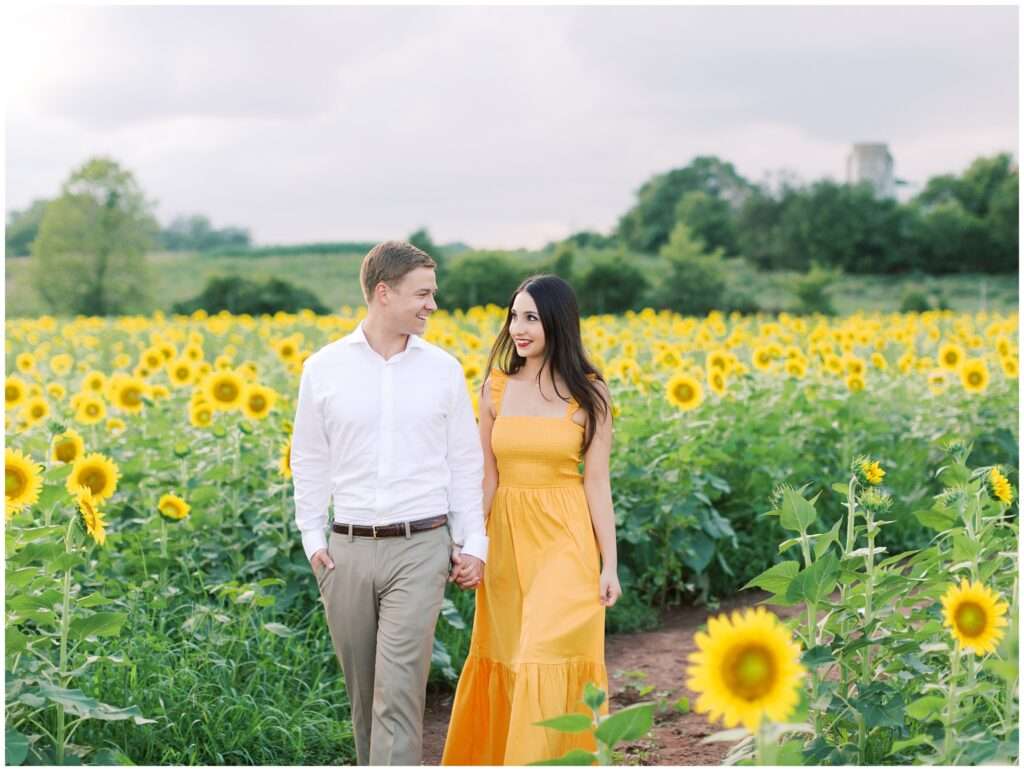
Burnside Farms runs its “Summer of Sunflowers” as a full u-pick operation, which means you buy a ticket, grab a bucket, and walk out with an armful of stems rather than just photos. The rows are cut wide enough for strollers and tripods, the field is enormous, and the bloom window generally runs late July through August depending on how the season went. What nobody warns you about is the ground — a working Virginia farm field after a summer thunderstorm turns into red clay that grips shoes and does not let go.
What to Pack to Visit Burnside Farms
- Waterproof nano protector spray — Four minutes the night before puts a barrier between red clay and canvas.
- Dual-sided sneaker cleaning kit — Keep it in the car, because scrubbing dried clay later is a far worse job than dealing with it wet.
- 60L foldable duffle with shoe compartment — Collapses to nothing on the way out and holds muddy shoes, cut stems, and a wet towel on the way back.
Disclosure: This post contains Amazon affiliate links. I earn a small commission at no extra cost to you.
5. Dorothea Dix Park — Raleigh, North Carolina
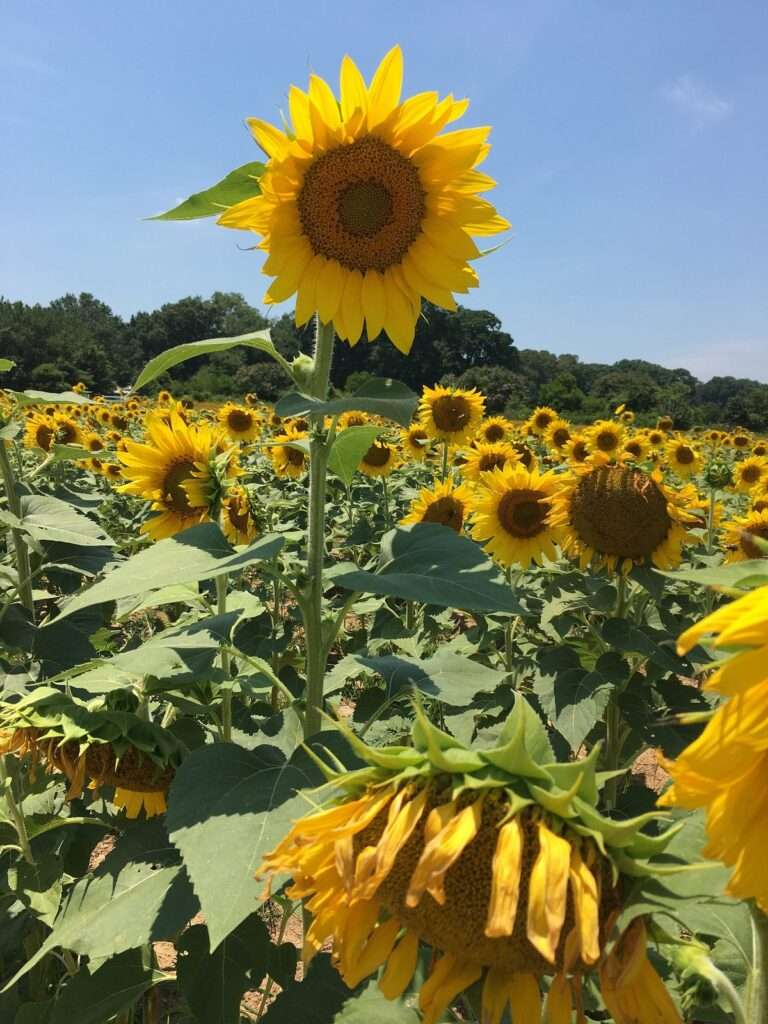
Raleigh has a full sunflower field inside its city limits, planted on the old Dorothea Dix campus a few minutes from downtown, and it blooms earlier than almost everything else on this list — usually late June into early July. It’s free, it’s open, and the skyline sits right behind the flowers, which makes for one of the more unusual compositions you’ll get anywhere: high-rises over a wall of yellow heads. It’s also a public park in the middle of a city in July, so expect crowds, expect heat, and expect very little shade between the parking area and the field.
What to Pack to Visit Dorothea Dix Park
- Stadium-approved 12×6×12 clear backpack — Park events here increasingly follow clear-bag rules, and this still holds water and a camera.
- Clip-on handheld turbo fan — The difference between staying an hour and leaving after fifteen minutes in Piedmont humidity.
- Aluminum-free 48-hour deodorant — A trip that starts downtown and ends with you sweating through a shirt justifies the upgrade.
6. Colby Farm — Newbury, Massachusetts
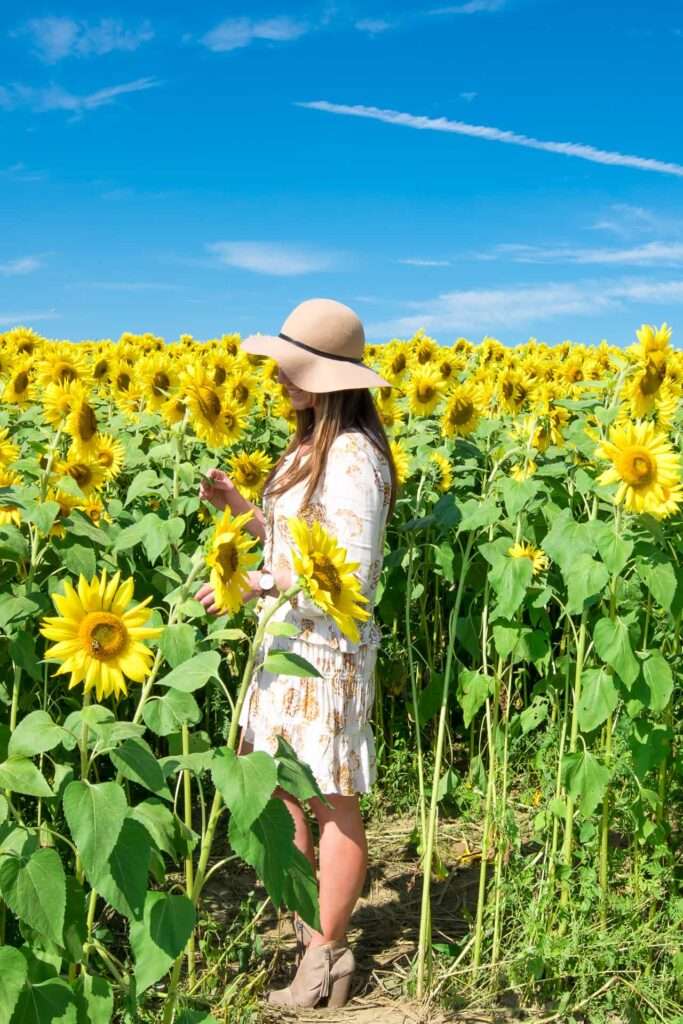
Colby Farm on Scotland Road plants a hillside of sunflowers that has become one of New England’s most photographed fields, with coastal light coming in low and clean off the Great Marsh. The bloom lands in late August, lasts about two weeks, and draws a crowd far larger than the neighborhood road can absorb. Parking is the whole story here — the town enforces restrictions hard, the farm charges a small fee for its lot, and cars left on the shoulder get ticketed, so plan to arrive early and pay rather than improvise.
What to Pack to Visit Colby Farm
- 3-axis phone gimbal stabilizer — Handheld video on a sloped dirt path shakes badly, and this turns it into something you’d actually post.
- Qi2 magnetic wireless power bank — Snaps to the back of the phone and charges while you shoot, which matters with tracking mode running.
- Ultra-thin wallet tracker card — Parked blocks away in a strict neighborhood, a dropped wallet in a sunflower row stays a minor annoyance.
7. Anderson Farms — Erie, Colorado
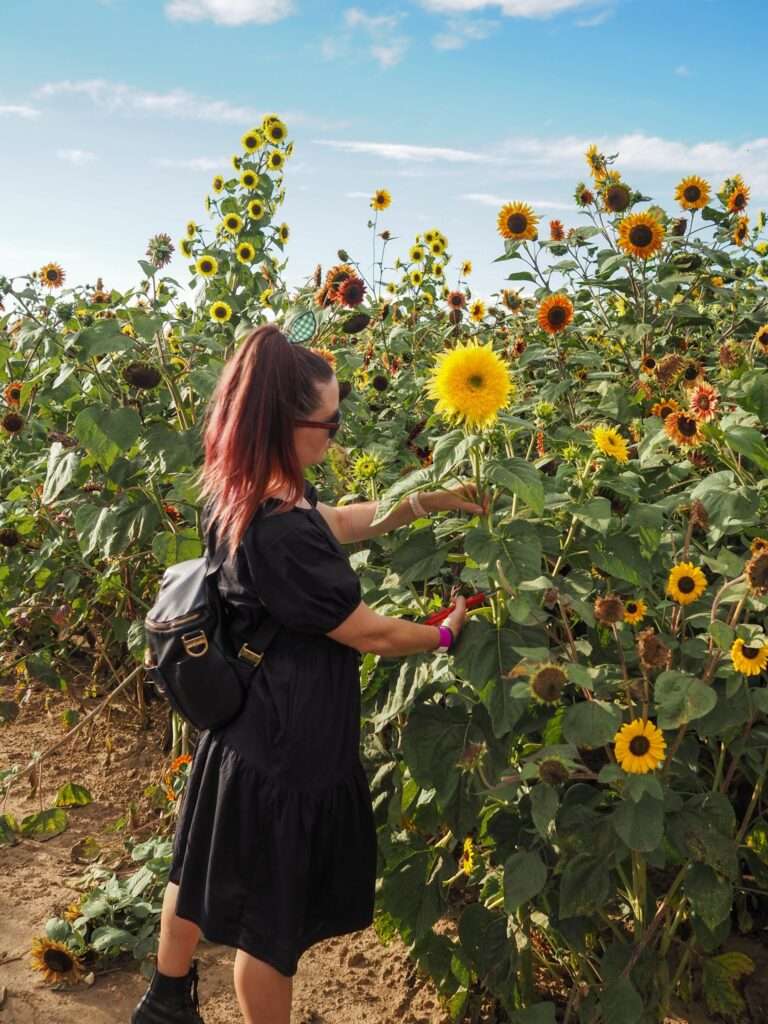
Anderson Farms dedicates about 15 acres to u-pick sunflowers with more than 20 varieties plus a full acre of wildflowers and zinnias, and admission includes a wagon ride out to the field. The season is short and specific — roughly the first three weeks of August — and the field closes at 8 p.m. as the sun drops behind the Front Range. Colorado adds a wrinkle most visitors underestimate: at 5,000 feet in dry air, you burn faster, dehydrate faster, and feel fine right up until you don’t.
What to Pack to Visit Anderson Farms
- Ultra-lightweight SPF 50 face fluid — High-altitude sun burns faster, and this leaves no white cast in photos.
- SPF 25 intensive lip balm — Lips crack first in Front Range dry air, so this one actually gets used.
- Collapsible BPA-free water container with spigot — The farm lets you bring your own food and drink, making this the smartest thing in the trunk.
8. The US-83 Sunflower Belt — Central North Dakota
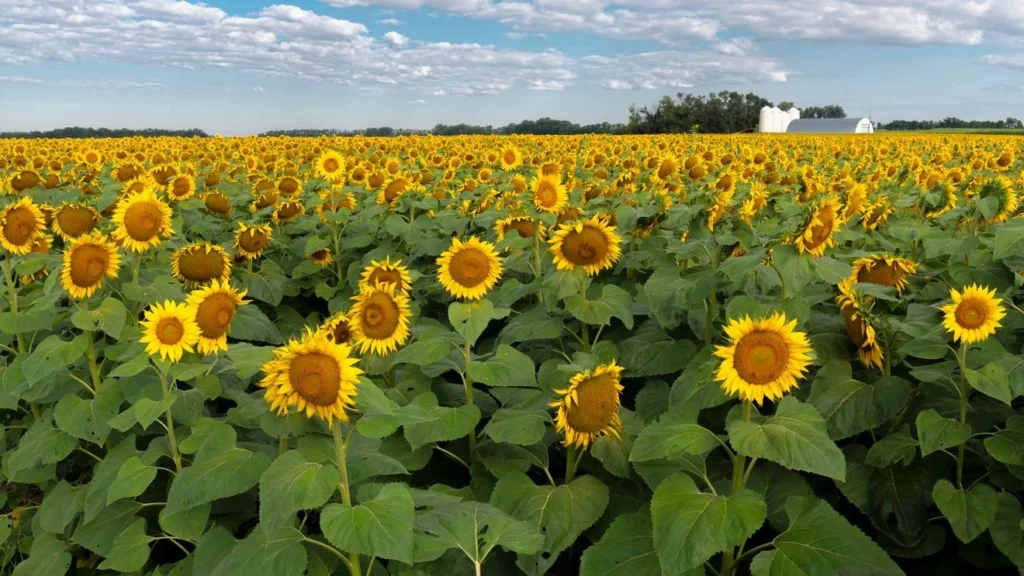
North Dakota grows more sunflowers than almost any other state, and the difference between a planted attraction and an agricultural region becomes obvious the first time you crest a rise on US-83 and see the crop running to the horizon on both sides. These are commercial fields, not tourist stops, so you photograph from public road shoulders and pullouts and you never step past a fence line. Peak color runs late July into mid-August, and the stretch between Bismarck and Minot delivers the highest density with the least effort.
What to Pack to Visit the North Dakota Sunflower Belt
- 4K front-and-rear dash cam with GPS — Documents the drive and covers you on rural two-lanes where shoulder stops are constant.
- Freeze-dried ice cream sandwiches, 6-pack — Services are thin out there, and this survives a hot car with no cooler.
- Graduated compression socks — Six or seven hours behind the wheel is why your legs still feel fine at dinner.
9. Maria’s Field of Hope — Avon, Ohio

Maria’s Field of Hope is 18 acres of sunflowers planted alongside I-90 in memory of Maria McNamara, who died of a brain tumor at seven, and it exists to raise money and attention for childhood cancer research. The Avon field is timed deliberately to bloom in September, for Childhood Cancer Awareness Month, and it’s free to visit from sunup to sundown, with donations accepted and a small shop on site. It’s a beautiful field and a heavy one, and most people who go end up staying longer than they planned.
What to Pack to Visit Maria’s Field of Hope
- Waterproof 4K action camera — The rows are wide and family-friendly, and this handles kids running ahead without you fearing a drop.
- Bamboo folding hand fan — Ohio’s September afternoons still run warm, and it doubles as a prop that reads well in photos.
- Solid wood 11×14 picture frame — Most people leave here with one image they actually want on a wall.
10. West Union Gardens — Hillsboro, Oregon
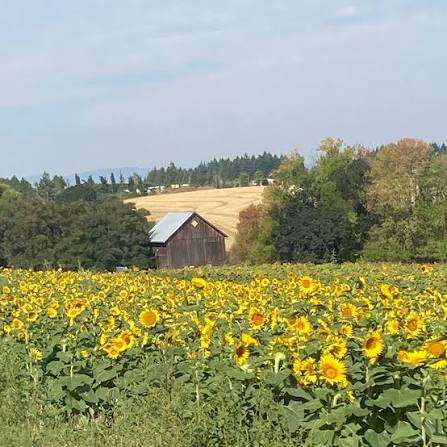
Twenty minutes west of Portland, West Union Gardens plants a sunflower field purely for photography, and it’s about as unpretentious as this gets — a working you-pick berry and vegetable farm that opens its blooms for a $5 ticket. The window is famously short, generally mid-August, and the farm posts daily condition updates during the season because a one-to-two-week peak leaves no margin for a bad guess. The field is open dawn to dusk Monday through Saturday, and the gravel drive in will coat your car in a fine layer of Willamette Valley dust.
What to Pack to Visit West Union Gardens
- Compact action camera with built-in light — Sunflower heads all face east, and this handles backlit contrast better than a phone fighting the sky.
- Foldable over-ear Bluetooth headphones — The run out from Portland is short but real, and the passenger seat gets considerably better.
- Cordless 4-in-1 car vacuum — 19,000pa clears the gravel dust from your floor mats in one pass, not three coin-machine trips.
Disclosure: This post contains Amazon affiliate links. I earn a small commission at no extra cost to you.
Sunflower season is a two-week negotiation with the weather, and the single best habit you can build is checking the farm’s own social feed the morning you leave rather than trusting a listicle published in April. Free fields like McKee-Beshers and Maria’s Field of Hope survive entirely on visitors behaving well, so stay on the paths, don’t snap stems, and leave the field looking like you were never there. When the blooms are done for the year, these same routes make excellent late-summer driving — plenty of them overlap with the best national scenic byways in the US.