


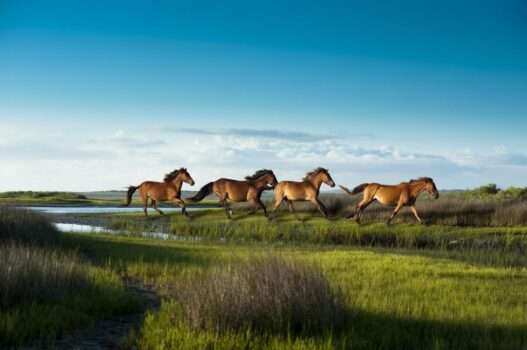
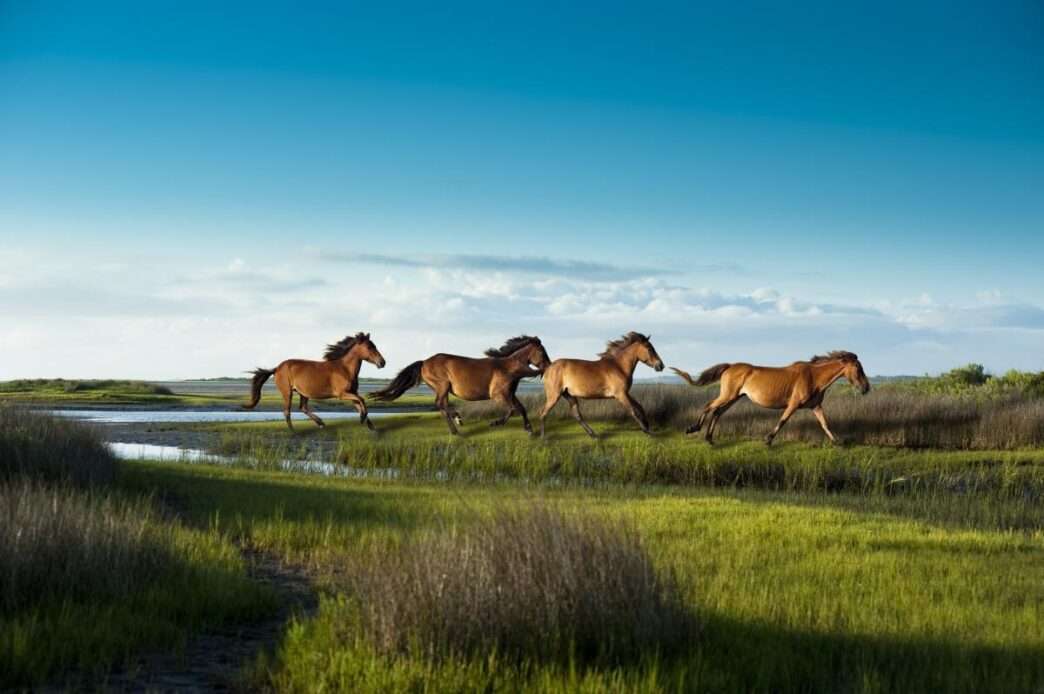
Wild horses are one of the few genuinely unscripted things left in American travel. No feeding times, no glass, no keeper talk at 2 p.m. — just a band of mares grazing a dune line or a stallion cutting across a dirt road while you sit in your car and wait. Some of these herds trace back to Spanish colonial stock, some to ranch horses that simply never left, and all of them are wilder than the average visitor expects.
A quick note before you go: every herd on this list has a legal or recommended viewing distance, usually 50 feet, and the rangers do write tickets. Horses that get comfortable with people get hit by cars, and that is how herds shrink. Stay in the car when you can, use zoom instead of your feet, and never hand over food.
1. Assateague Island National Seashore, Maryland
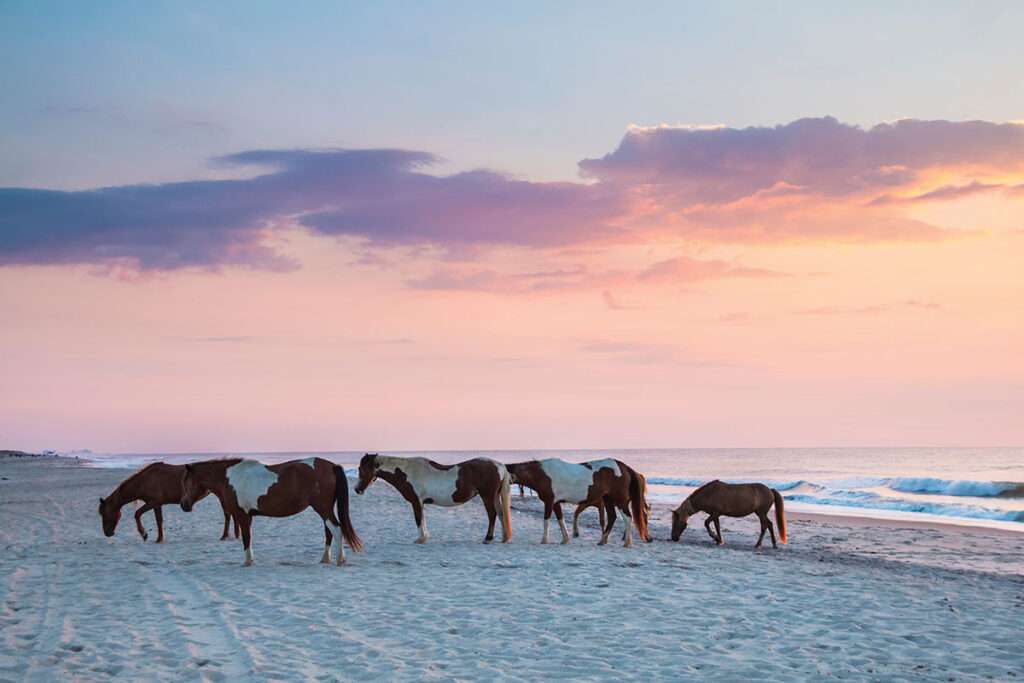
Assateague is the one place on this list where you can pitch a tent on the sand and watch wild ponies walk past your campsite at breakfast, which sounds charming until one tries to open your cooler with its teeth. The Maryland herd runs around 80 to 100 animals, split into bands that move between the dunes, the marsh, and the beach depending on wind and bugs, and the National Park Service asks visitors to keep a full 40 feet back. Come in late May or September — July and August bring greenhead flies that bite hard enough to make the horses themselves run into the surf.
As an Amazon Associate, I earn from qualifying purchases.
What to Pack for Assateague Island
Kodak PIXPRO FZ55 compact camera — a 5x optical zoom and a pocketable body mean you can frame a pony against the dunes without walking one step closer.
Bago 60L foldable duffle bag — beach camping means hauling everything from the lot to the sand, and this one folds flat for the drive home with a separate shoe compartment for wet sneakers.
Cordless handheld car vacuum — Assateague sand ends up in the footwells no matter how careful you are, and cleaning it out before it grinds into the carpet is a five-minute job.
2. Corolla and the Currituck Outer Banks, North Carolina
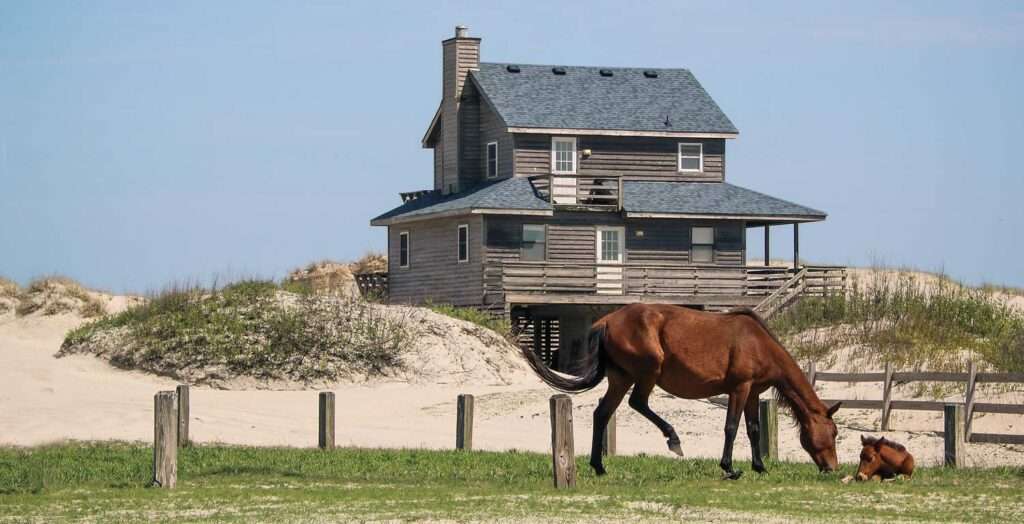
North of Corolla the paved road simply ends and the beach becomes the highway, which is where roughly 100 Colonial Spanish Mustangs live among the dunes, gardens, and side streets of Carova. These are working descendants of horses that came ashore centuries ago, and Currituck County law requires visitors to stay 50 feet away — the Corolla Wild Horse Fund tracks every violation. Book a permitted 4×4 tour if you do not have real off-road tires, because getting stuck in soft sand on a rising tide is a very expensive afternoon.
What to Pack for Corolla
KAHI Airy Fit SPF 50+ sun stick — the reflected glare off open sand is brutal, and a stick format lets you reapply mid-tour without greasy hands on your camera.
70mai A810 Lite 4K dash cam — front and rear 4K recording is genuinely useful on a beach drive where horses appear from behind dune lines with no warning.
Sunday Afternoons Sunset Hat, UPF 50+ — a shapeable brim holds its form in Outer Banks wind instead of folding into your eyes every gust.
3. Shackleford Banks, North Carolina
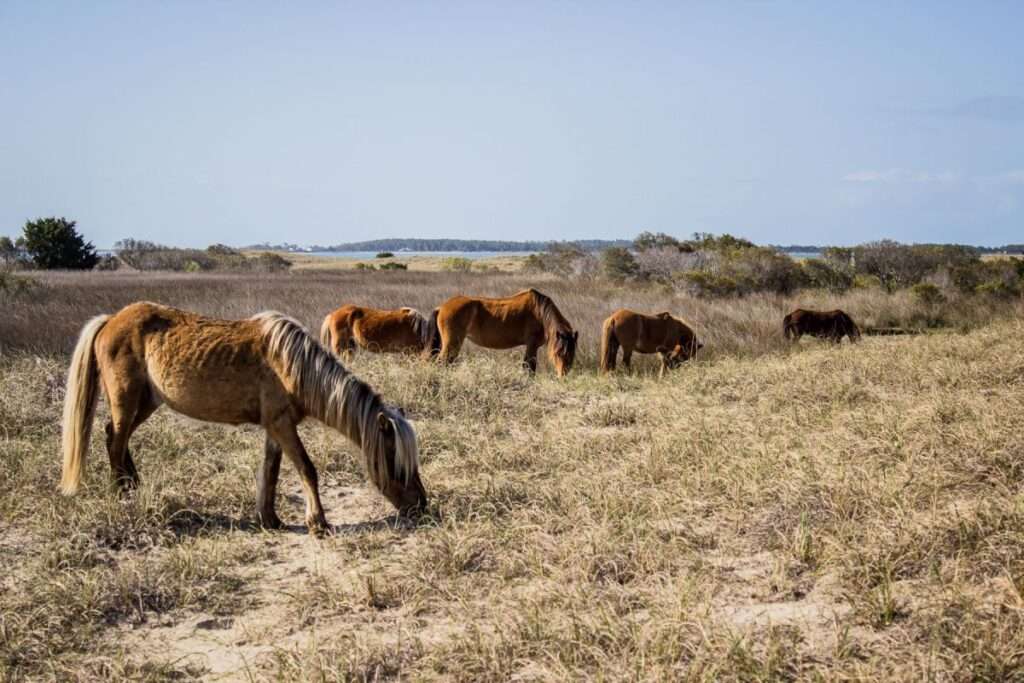
Shackleford is a nine-mile barrier island inside Cape Lookout National Seashore with about 110 to 130 horses, no roads, no shade structures, and no drinking water — you arrive by ferry from Beaufort or Harkers Island, or you paddle. The herd descends from Spanish stock and is managed jointly by the Park Service and the Foundation for Shackleford Horses, which keeps numbers deliberately low so the island’s forage holds up. Go on the first ferry of the morning, because the horses move toward the sound side and the shade in the heat of the day and you will spend midday walking sand for nothing.
What to Pack for Shackleford Banks
Padded kayak seat cushion — paddlers crossing Back Sound will feel every one of those 45 minutes without one, and it doubles as something dry to sit on ashore.
WaterStorageCube collapsible water jug with spigot — there is no potable water on the island, so you carry the day’s supply in and the empty jug packs down to nothing.
DJI Osmo Action 4 — a waterproof body handles boat spray and salt mist that would kill a mirrorless camera, and 4K/120fps catches a canter properly.
As an Amazon Associate, I earn from qualifying purchases.
4. Cumberland Island National Seashore, Georgia
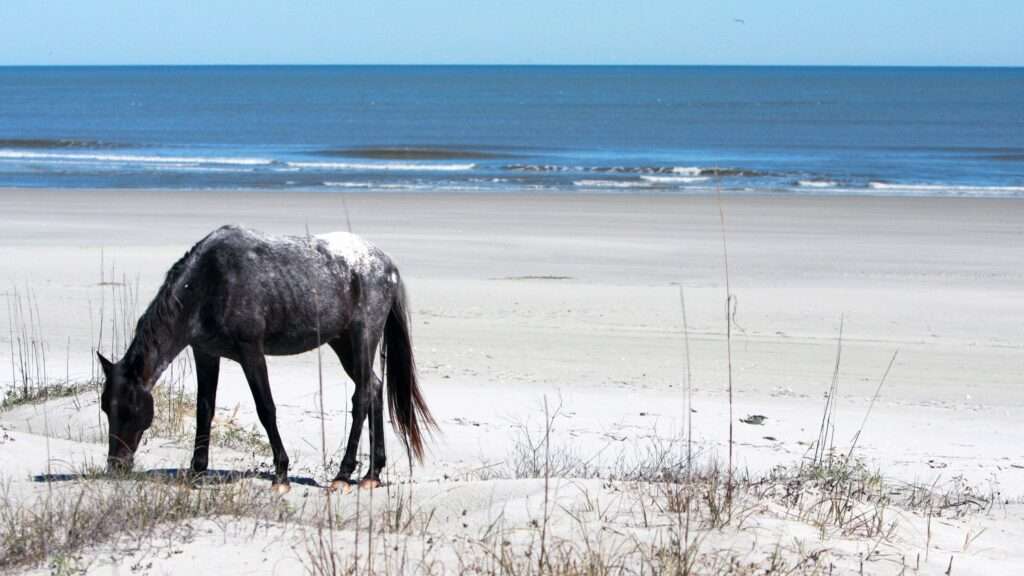
Cumberland’s roughly 150 horses are the most truly unmanaged herd in the country — no vet care, no supplemental feed, no contraception — and you will see the results in the form of thin animals and cracked hooves alongside the postcard shots. They wander the ruins of the Dungeness mansion, the live oak allées, and the wide flat beach, and the visual of a horse standing in a burned-out Carnegie estate is the reason photographers keep booking the ferry from St. Marys. Reserve that ferry weeks out in spring, and plan on walking: the island runs 17.5 miles long and the trails are soft sand and crushed shell.
What to Pack for Cumberland Island
Darn Tough Vermont hiker boot socks — merino, midweight, and full cushion, which is what a day of soft-sand miles actually demands from a sock.
Clip-on portable turbo fan — coastal Georgia humidity in June is a wall, and a fan clipped to a daypack strap or a bunk at Sea Camp changes the whole afternoon.
BYOMA SPF 50 face fluid — lightweight enough that it will not run into your eyes when you sweat through a shadeless stretch of beach.
5. Grayson Highlands State Park, Virginia
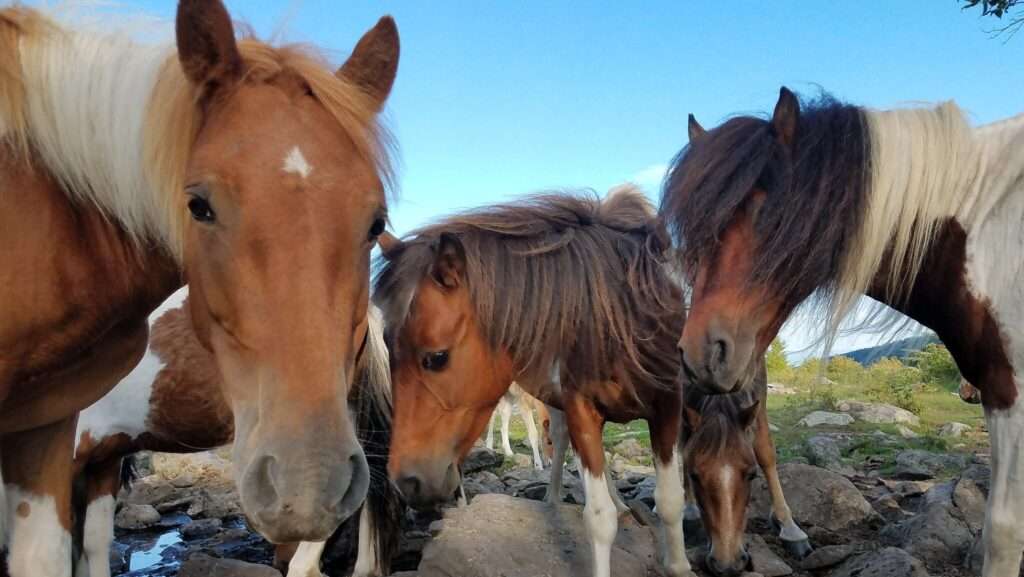
The Grayson Highlands ponies are the outlier here — introduced in the 1970s to graze the high mountain balds and keep them open, and now more than a hundred of them roam above 4,500 feet in what looks convincingly like Scotland. Park at Massie Gap, walk twenty minutes toward the Appalachian Trail, and you will usually find a band grazing the grass among the rocks; they are famously indifferent to hikers, which is exactly why people get too close and get bitten. The best stretch is late September into October, when the balds turn gold and the crowds thin out after Labor Day.
What to Pack for Grayson Highlands
Merino wool base layer T-shirt — the balds swing 25 degrees between a sunny 11 a.m. and a windy 4 p.m., and merino handles both without holding sweat.
Crep Protect waterproofing spray — the trails up from Massie Gap hold water for days after rain, and treating your boots the night before is cheaper than replacing them.
DJI Osmo Mobile 7P gimbal — native subject tracking keeps a wandering pony centered while you walk uneven rock, which handheld phone video will never do.
6. Lower Salt River, Arizona
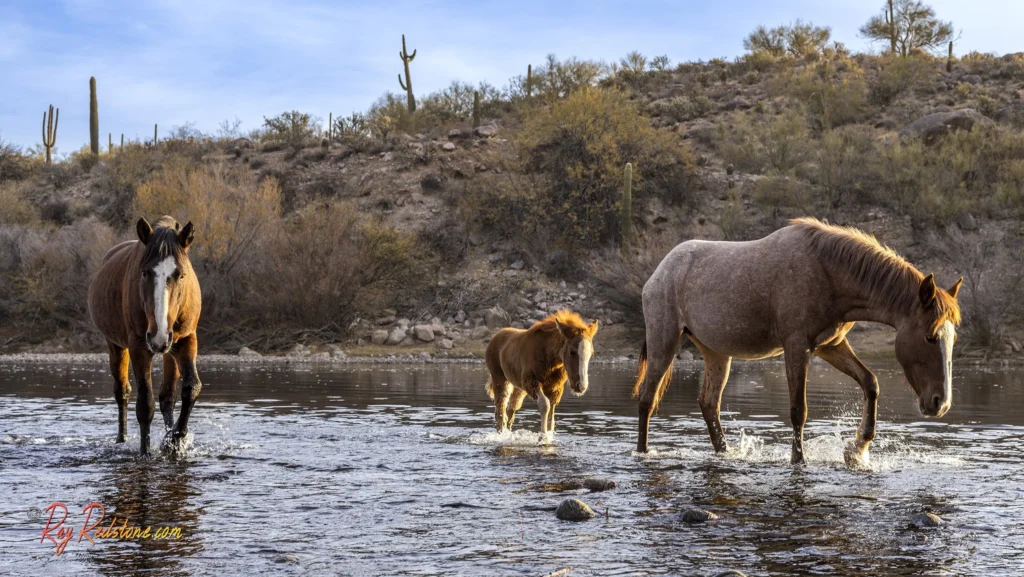
The Salt River herd, in Tonto National Forest about 45 minutes from Phoenix, is the easiest wild horse sighting in the western United States — you park at Coon Bluff, Phon D Sutton, or Butcher Jones and often see horses standing chest-deep in the river eating eelgrass. Numbers hover in the low hundreds and the Salt River Wild Horse Management Group patrols the recreation sites, partly to keep tubers from wandering into the middle of a band. Go at sunrise between October and April; summer afternoons here hit 110°F and the horses retreat into cottonwood shade where you cannot see them anyway.
What to Pack for the Lower Salt River
Instant sneaker cleaning kit — Salt River mud is a fine grey silt that dries into your shoes like cement, and dual-sided sponges get it out before it sets.
iWALK 4,500mAh pocket power bank — small enough to live in a shorts pocket, which matters when you burn half a battery filming a herd crossing the river.
Packable wide brim sun hats, 3-pack — the ponytail opening and UV-rated brim make this the one hat people actually keep wearing in Arizona heat.
7. Onaqui Herd Management Area, Utah
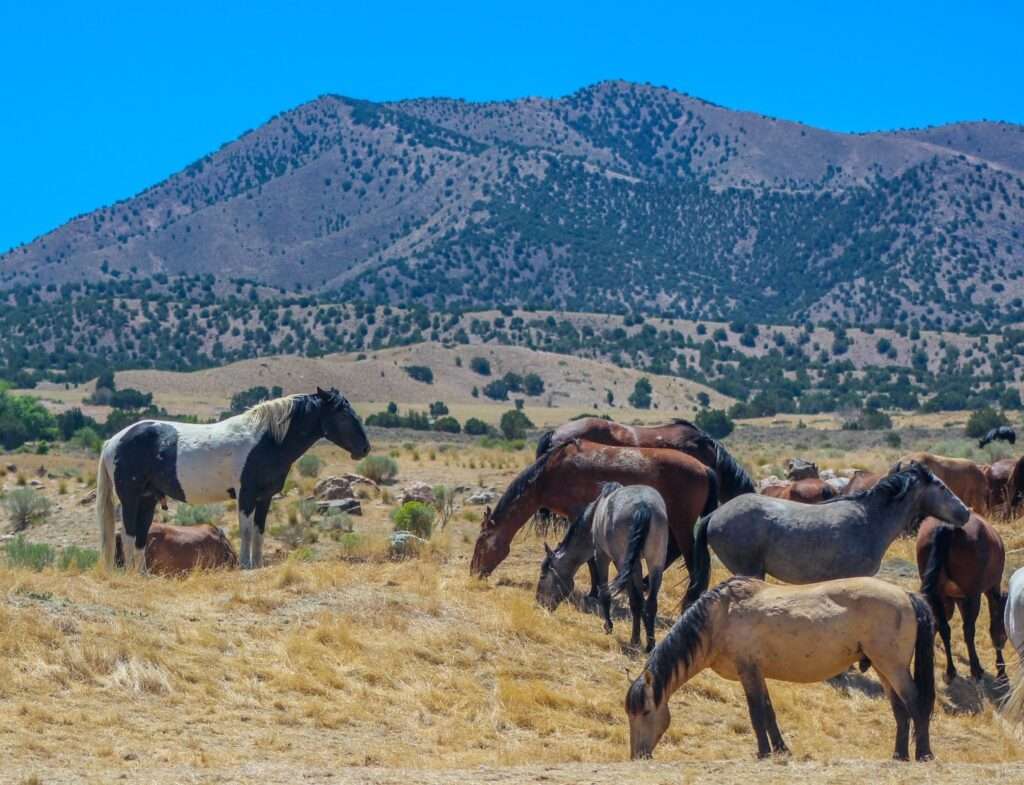
Onaqui is where photographers go when they want horses against nothing at all — open sagebrush flats in Utah’s west desert, framed by the Onaqui Mountains, roughly 90 minutes southwest of Salt Lake City along the old Pony Express Road. The BLM herd has been reduced hard by gathers in recent years, so plan on driving slow miles rather than pulling up to a guaranteed band, and bring a paper map because cell service disappears past Faust. There is no gas, no water, and no shade out here, which is the whole appeal and also the thing that ends badly for underprepared visitors every summer.
What to Pack for Onaqui
Rechargeable compressed air duster — west desert dust gets into lens threads and sensor cavities, and 130,000 RPM of air beats a cloth every time.
Baseus 100W 20,000mAh power bank — four ports and enough capacity to keep a phone, a camera, and a GPS alive across a full day with no outlet within 40 miles.
TravelJohn disposable urinal bags — unglamorous, leakproof, and the correct answer when the nearest restroom is an hour of washboard road away.
8. Sand Wash Basin, Colorado
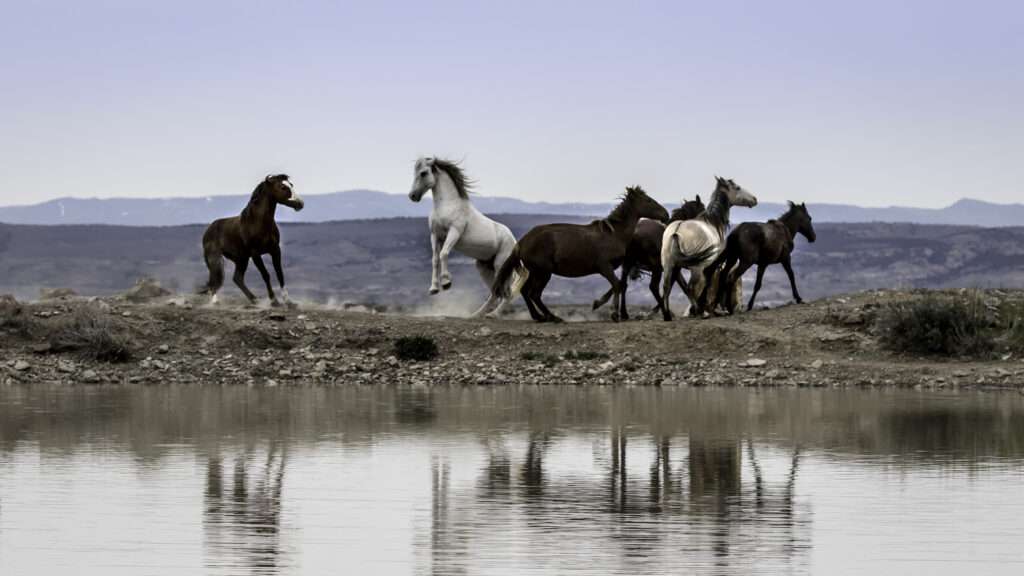
Sand Wash Basin covers about 160,000 acres of northwest Colorado near Craig, and its horses became internet-famous largely thanks to a white-and-roan stallion named Picasso who lived past 30 out here. It is high, dry, wide-open country crossed by dirt roads that turn to slick clay after rain, so a high-clearance vehicle and a full tank of gas are not optional. Sunrise and the last hour of light are when the bands come to the water sources, and that is also when the basin’s flat sage light finally becomes worth photographing.
What to Pack for Sand Wash Basin
K&F Concept 75″ travel tripod — long lenses at dawn need support, and this one packs down small enough to ride in a footwell for days.
Bulk camouflage netting — draped over a vehicle window or a folding chair it breaks up your outline, and it doubles as a sunshade in country with zero trees.
Mountain House freeze-dried ice cream sandwiches, 6-pack — the nearest real food is back in Craig, and these survive a hot car in a way that nothing else in your cooler will.
9. Pryor Mountain Wild Horse Range, Montana
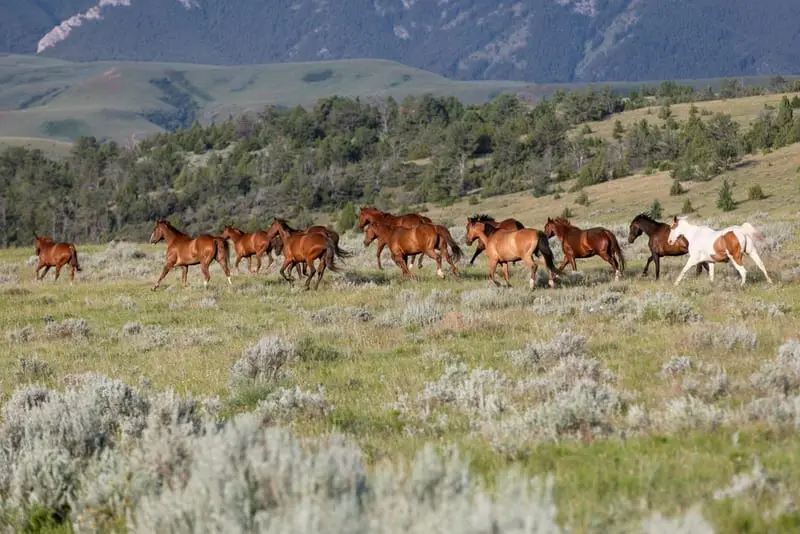
The Pryors hold the distinction of being the first federally protected wild horse range in the country, designated in 1968, and the herd’s Spanish colonial genetics show up clearly in the dun coats, dorsal stripes, and leg barring. Roughly 160 to 180 horses range from the desert floor near Bighorn Canyon up to alpine meadows above 8,000 feet, and the high country is where the good sightings are — which means Burnt Timber Ridge Road, a route that genuinely requires high clearance and nerve. Stop at the Pryor Mountain Wild Mustang Center in Lovell, Wyoming first; the volunteers there will tell you which bands have been seen where that week.
What to Pack for the Pryor Mountains
Venustas heated jacket with battery pack — the top of the range can sit 30 degrees colder than the trailhead, and battery heat beats carrying three layers you will not wear.
Waterproof insulated gloves — glassing a hillside at 8,000 feet in September gets cold fast, and bare hands on a metal tripod head is a short-lived plan.
GoPro LIT Hero — a compact waterproof body mounted to the dash captures the drive up Burnt Timber, which is honestly half the story.
10. Theodore Roosevelt National Park, North Dakota
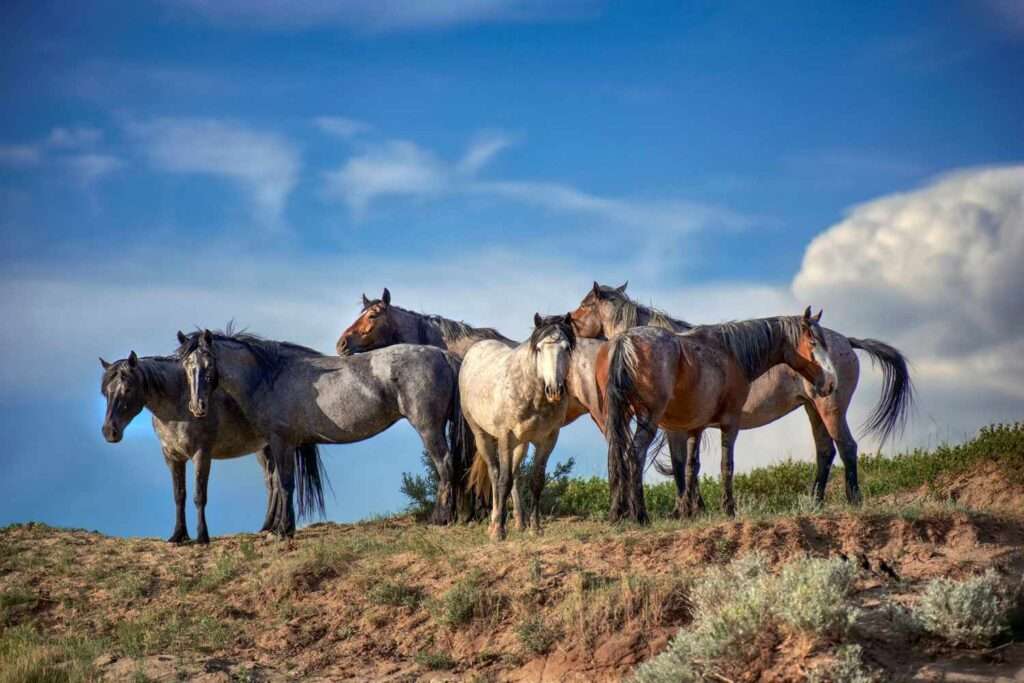
About 200 horses roam the South Unit of Theodore Roosevelt National Park, and they are the only herd on this list whose continued existence has been argued about on the floor of the U.S. Senate — the Park Service dropped its removal proposal in 2024, and lawmakers have since pushed legislation to lock in a minimum herd size. Drive the 36-mile scenic loop slowly and scan the flats near Peaceful Valley Ranch and the Buck Hill area; the badlands’ banded clay makes an unreasonably good backdrop for a bay horse. Late May and June bring green grass and foals, and the park is quiet enough that you may have a band entirely to yourself for twenty minutes.
What to Pack for Theodore Roosevelt National Park
Jack Black Intense Therapy lip balm, SPF 25 — badlands wind plus high plains sun will crack your lips in a single afternoon, and this one actually has real sun protection in it.
Apple MFi wallet tracker card — thin enough to sit in a wallet and useful the moment you set something down on a pullout and drive off.
Soft cashmere-feel travel scarf — the wind coming across those flats has nothing to slow it down, and a scarf packs smaller than the jacket you would otherwise need.
As an Amazon Associate, I earn from qualifying purchases.
Final Thoughts
The herds that survive are the ones where visitors keep their distance, which is a genuinely unromantic conclusion for an article about wild horses. Give them fifty feet, stay in your vehicle when the option exists, and let them be the ones who decide how close the encounter gets. Several of these stops sit within a day’s drive of each other — Assateague to Corolla to Shackleford is one long coastal run, and the Pryors to Sand Wash Basin makes a good western week if your camping setup is already dialed in.