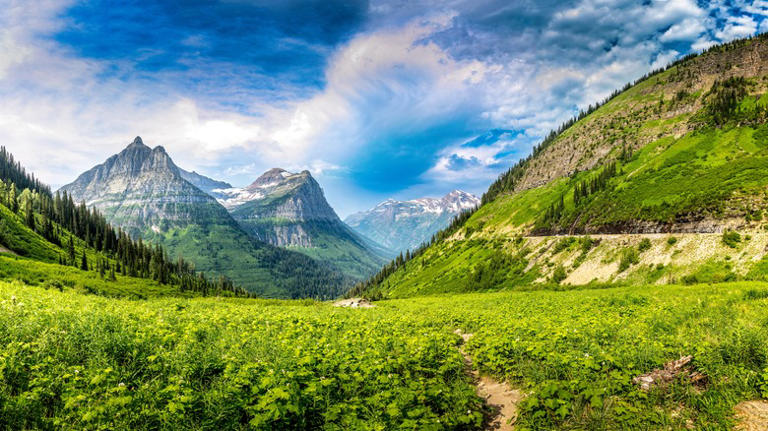



Lakefront campgrounds in the US range from muddy reservoir pull-offs to alpine basins where you can stand knee-deep and read the pebbles under your feet, and this list is entirely about the second kind. Clarity comes down to a few unglamorous factors: cold water, low nutrient levels, rocky or sandy bottoms instead of silt, and not much runoff feeding in.
The lakes below check most of those boxes, which is why they show up again and again on lists of the clearest lakes in the country and why their campgrounds book out months ahead. Every entry pairs a real campground with the gear that actually earns space in the car, and if you want the broader picture first, our roundup of the most beautiful lakes in the US covers the scenery side.
D.L. Bliss State Park, California
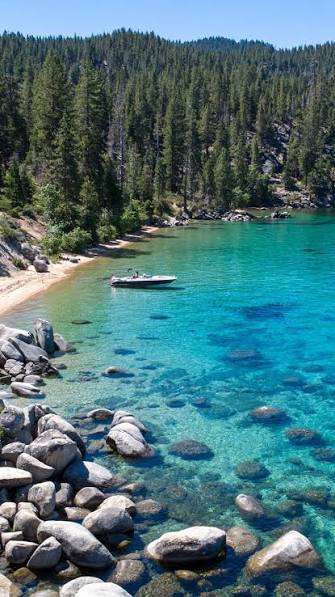
D.L. Bliss sits on the southwest shore of Lake Tahoe with roughly 150 sites spread across granite benches above Lester Beach and Calawee Cove, and the water here is the reason the park has a reputation among divers as well as campers. Tahoe’s clarity is measured every year with a Secchi disk and typically lands somewhere in the 60 to 70 foot range, which in practice means you can stand on the boulders at Rubicon Point and watch the bottom drop away beneath you like a glass floor. Sites in the 141 to 168 range put you closest to the sand, they release six months out on ReserveCalifornia, and they are gone within minutes of the window opening, so set a calendar reminder rather than trusting your memory.
What to Pack for D.L. Bliss State Park
Quick-drying water shoes — Tahoe’s shoreline is granite cobble rather than soft sand, and bare feet lose that argument fast.
Floating waterproof phone pouch — A two-pack of marine-rated pouches that stay at the surface if you fumble one off a paddleboard.
Waterproof action camera — Underwater footage is the whole point at Rubicon Point, and a rugged compact handles the drop-off shots without a housing.
This post contains affiliate links. I may earn a small commission from qualifying purchases at no extra cost to you.
Mazama Campground, Crater Lake, Oregon
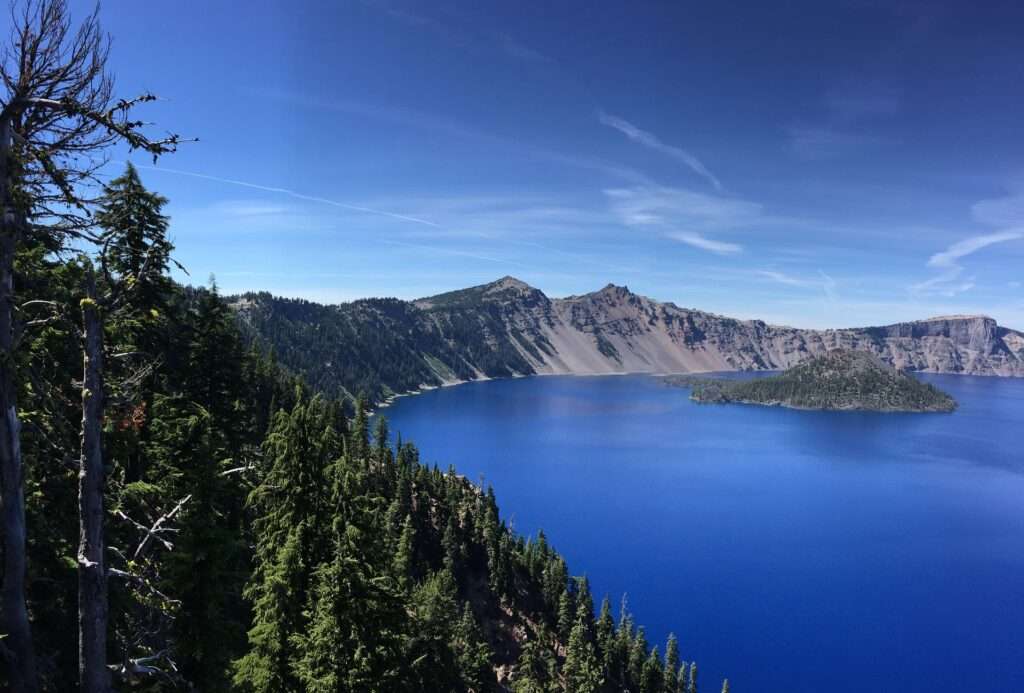
Mazama Campground holds around 214 sites in a lodgepole pine forest near Annie Spring, about seven miles from the rim, and it is the only developed campground in the park. Crater Lake is the clearest large body of water in the United States — researchers once recorded a Secchi reading of 143 feet — because nothing flows into it except snowmelt and rain, and at 1,943 feet deep it is also the deepest lake in the country. The only legal way into that water is the Cleetwood Cove Trail, a 1.1-mile switchback that drops 700 feet to the shoreline and makes you earn every foot of it back on the return climb.
What to Pack for Crater Lake
Collapsible trekking poles — The Cleetwood climb back up at 6,000 feet is where knees start filing complaints.
Mineral sunscreen SPF 50 — High-elevation UV reflecting off water and snowfields burns faster than the temperature suggests.
Collapsible filter water bottle — A one-liter squeeze bottle that packs flat once empty, useful on a trail with zero water stops.
Apgar Campground, Lake McDonald, Montana
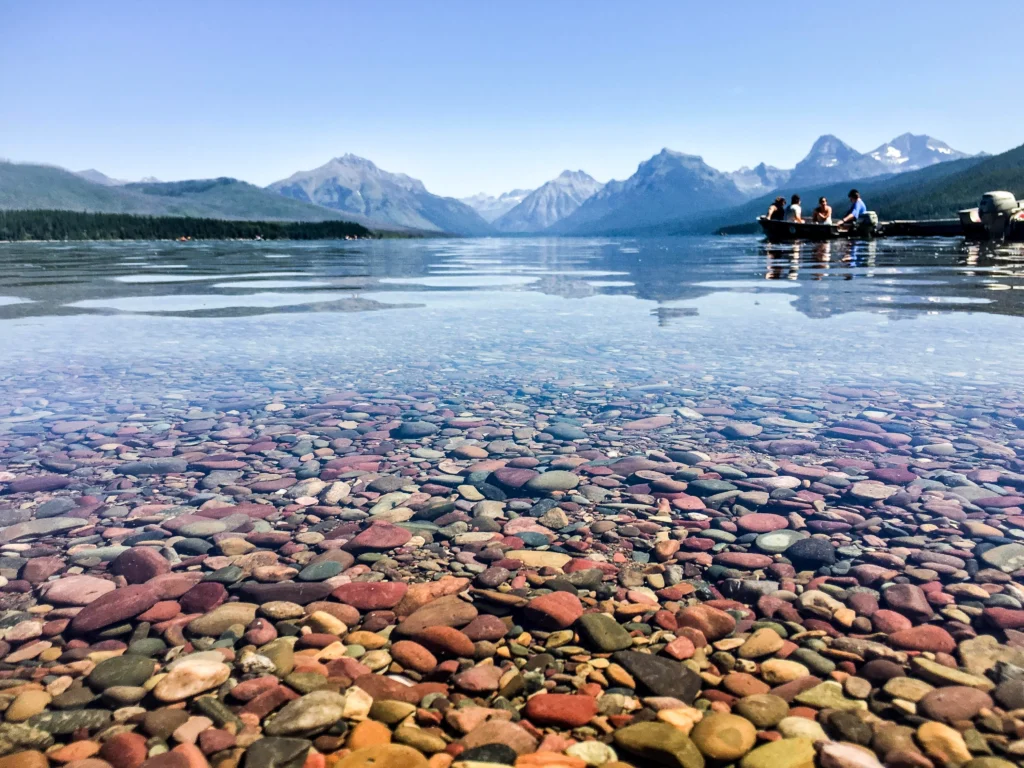
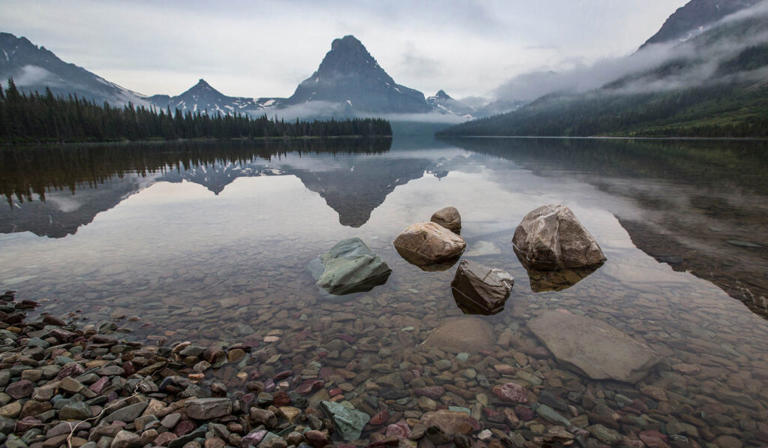
Apgar is the largest campground in Glacier National Park with 194 sites at the southwest end of Lake McDonald, close enough to the shore that you can walk from your tent to the water in a few minutes. The famous multicolored stones — red, green, maroon, and slate — are argillite and mudstone that formed in ancient seabeds, and they look painted precisely because ten miles of glacially cold, nutrient-poor water sits above them without a hint of algae. The lake is 472 feet deep and stays cold enough year-round that most people wade to their shins, take the photo, and retreat to a chair on the rocks with genuine relief.
What to Pack for Lake McDonald
Low-profile folding lake chairs — A two-pack of low-slung chairs that sit stable on cobble instead of sinking sideways.
Self-inflating thick sleeping pad — Glacier nights drop into the 30s in shoulder season, and loft underneath matters more than blanket weight.
Rechargeable lantern and spotlight — Two tools in one housing, which keeps the picnic table from becoming a gear yard sale.
Jenny Lake Campground, Wyoming
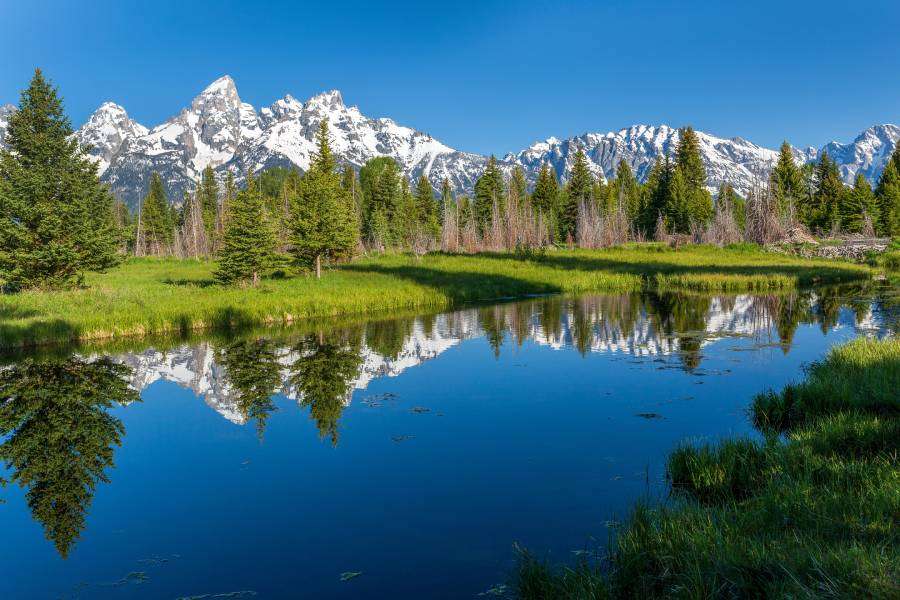
Jenny Lake Campground in Grand Teton National Park is tent-only, roughly 51 sites across two loops, with no RVs, no trailers, and no generators permitted anywhere inside it. The lake formed in a glacial cirque at the foot of Teewinot Mountain and Mount St. John, and its clarity comes from a small, cold, high-elevation watershed that delivers almost no sediment — on a calm morning the granite shelf below the eastern shore is visible from the shuttle boat. Sites are reservation-only on Recreation.gov on a six-month rolling window, the season runs early May to late September, and every site comes with a bear box you are expected to actually use.
What to Pack for Jenny Lake
Double sleeping pad with built-in foot pump — Inflates without a separate pump and covers two people, which matters when the max equipment length is 14 feet.
Three-season sleeping bag — Nights at 6,800 feet get down near freezing even in July.
Stainless steel camp cookset — Nesting pots and pans that scrub clean properly, since food smells are a bear-country problem here.
Lake Chelan State Park, Washington
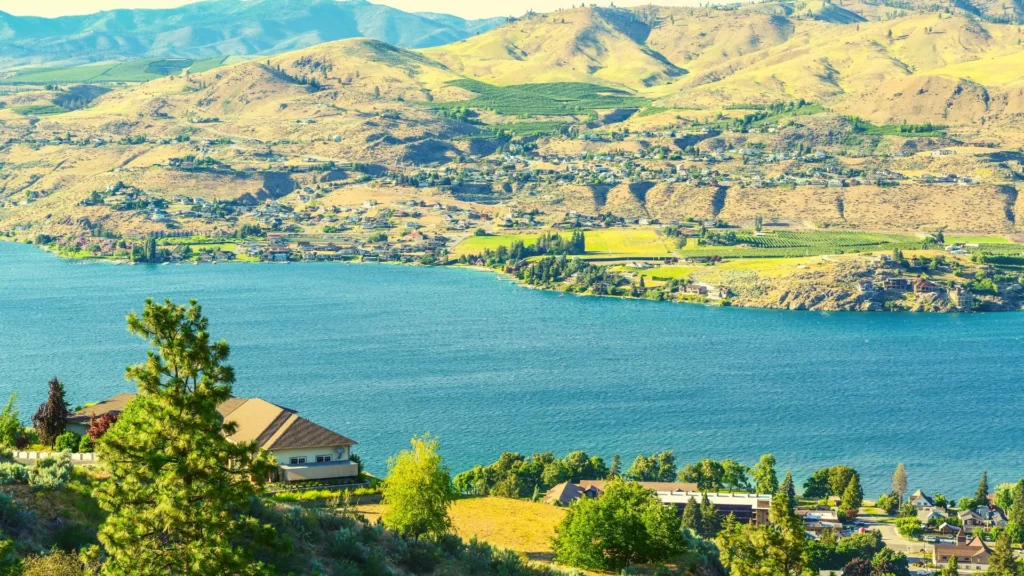
Lake Chelan State Park has about 109 sites on the south shore of a 50-mile glacial trench that reaches 1,486 feet deep, making it the third-deepest lake in the United States. The upper end is fed by cold, silt-free streams draining the North Cascades, and near the state park the water shifts from pale turquoise over the sandy shallows to an abrupt deep blue where the shelf falls away. Eastern Washington summers here regularly clear 90°F under near-constant sun, which is the rare combination of very warm air and very clear cold water that makes a swim genuinely worth it.
What to Pack for Lake Chelan
Battery-powered portable fan — Four speeds and a remote, which is what a 95-degree afternoon in a tent actually calls for.
UPF 50+ beach shade canopy — Shoreline shade is thin here, and a sand-anchored shelter buys you the whole afternoon.
Solar power bank — A 10,000mAh pack with a panel, handy at sites without hookups where the sun is relentless anyway.
Twelvemile Beach Campground, Michigan
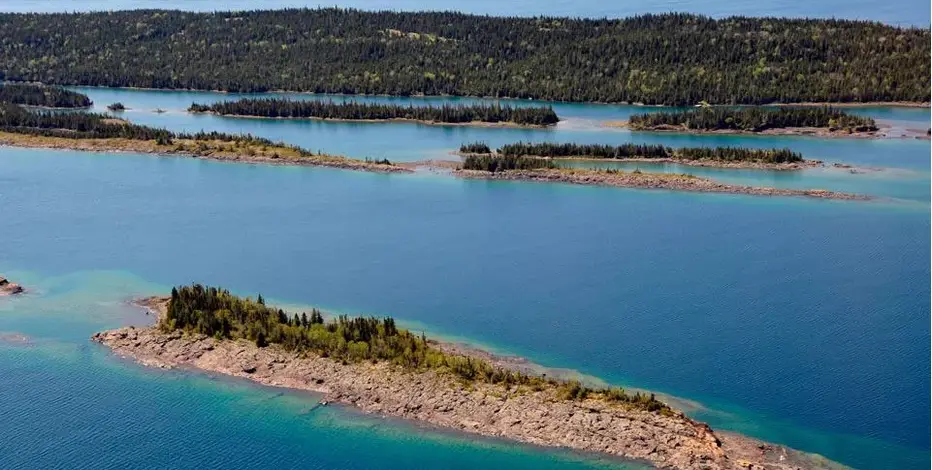
Twelvemile Beach sits inside Pictured Rocks National Lakeshore, 36 rustic sites reached through a stand of white birch, with three sets of stairs dropping down to the Lake Superior shoreline. Superior is cold, deep, and low in nutrients, so the shallows over its pale sand read almost tropical in photographs — right up until you step in and remember the lake averages around 40°F and rarely climbs past the mid-50s near shore. There are vault toilets, well water, and no hookups, cell service is effectively nonexistent, and the nearest firewood is a 15 to 20 minute drive away, which is a detail worth handling in daylight.
What to Pack for Twelvemile Beach
Portable mosquito repeller — Creates a protected zone around the picnic table without spraying anything on your skin.
Compact 8×42 monocular — Waterproof and pocket-sized, good for freighters on the horizon and the sandstone cliffs down the shore.
Freeze-dried meal kit — An assortment that needs only hot water, sensible when the nearest grocery run is close to an hour.
This post contains affiliate links. I may earn a small commission from qualifying purchases at no extra cost to you.
Hearthstone Point Campground, New York
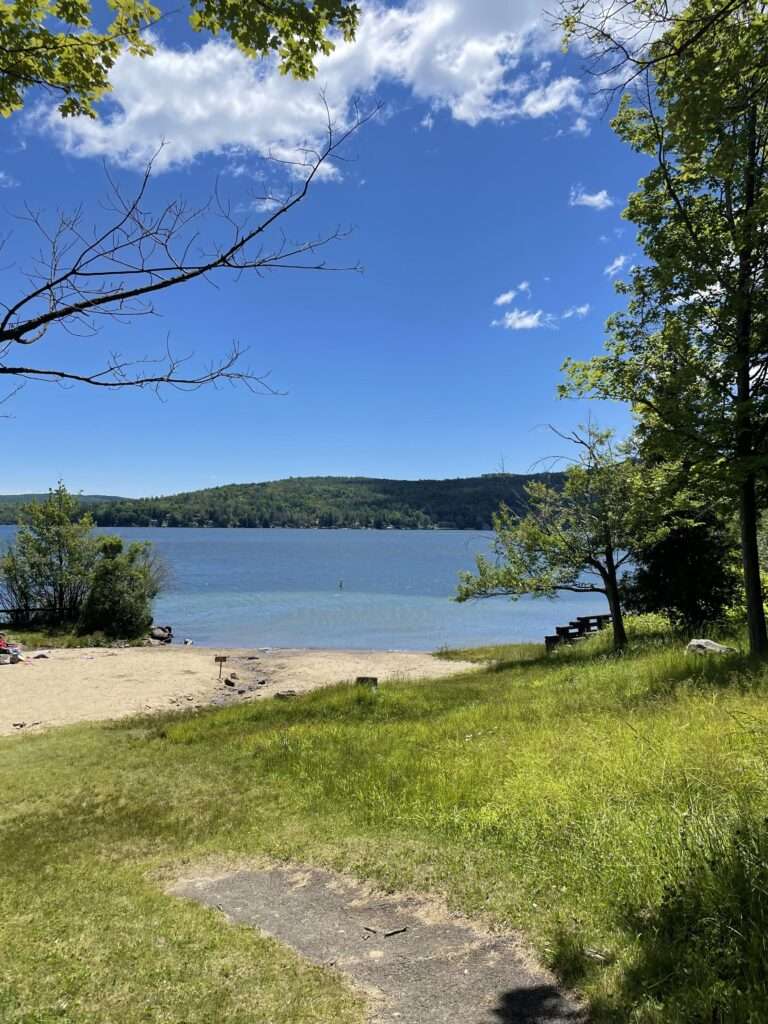
Hearthstone Point is a New York State campground on the west shore of Lake George, about two miles north of the village, with roughly 250 wooded sites and its own beach and boat launch. Lake George earned the nickname Queen of American Lakes partly on clarity — it is spring-fed, sits in a granite basin, and the water off its rock ledges routinely shows the bottom at 20 to 30 feet. The lake is 32 miles long with more than 170 islands, several of which have their own boat-access campsites, and the state monitors water quality here about as closely as anywhere in the Northeast.
What to Pack for Lake George
Roll-top waterproof backpack — A cushioned dry pack that survives a wet boat ride out to the islands.
Waterproof dry bag — A smaller roll-top sack for phones, keys, and a change of clothes on kayak days.
Memory foam camping mattress pad — Rolls up for transport and turns a root-riddled Adirondack tent pad into something you can sleep on.
Rendezvous Beach, Bear Lake, Utah
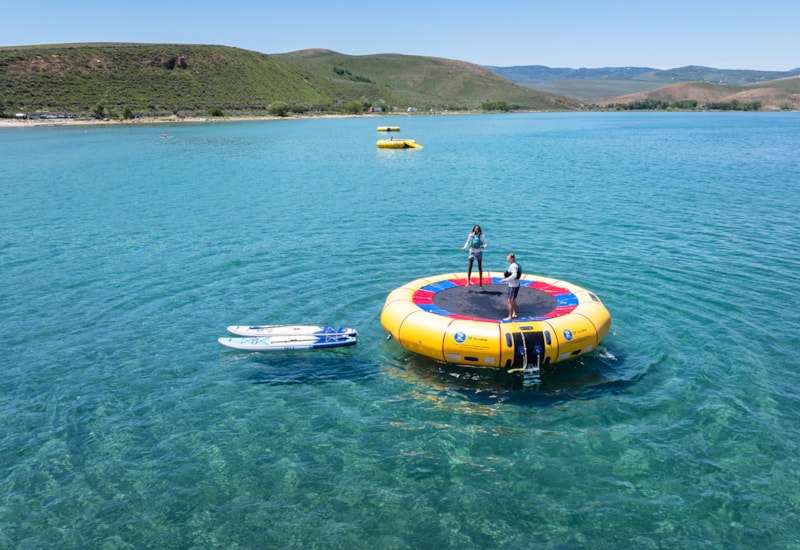
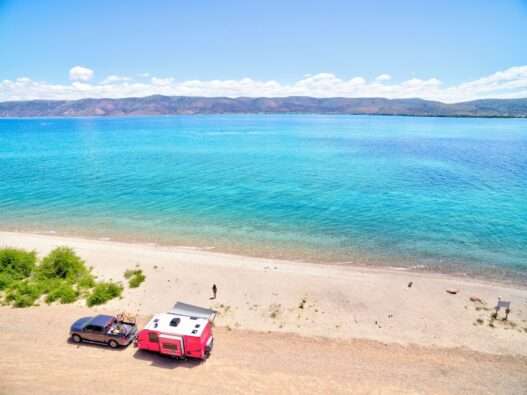
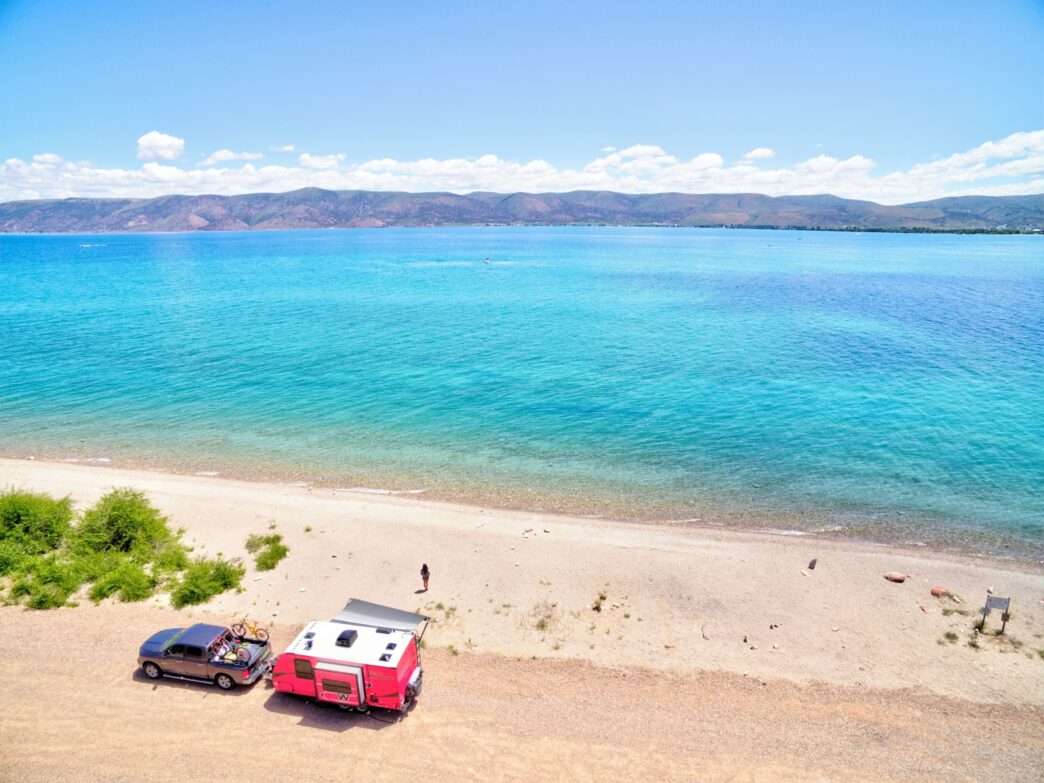
Rendezvous Beach on Bear Lake’s south shore is the state park’s main camping hub, split across the Birch, Big Creek, and Cottonwood loops with more than 100 full-hookup sites, 37 tent sites, flush toilets, and hot showers. The lake’s striking turquoise is not a filter — it comes from calcium carbonate suspended in the water, which scatters light and gives Bear Lake its nickname, the Caribbean of the Rockies. At 5,923 feet with a wide, gradually sloping sandy beach, this is the most social lake on the list, so build your plans around a busy shoreline rather than solitude.
What to Pack for Bear Lake
Inflatable lake lounge float — A four-foot floating chair built for adults, which is exactly the shoreline this lake has.
Reef-friendly sport sunscreen SPF 50 — Mineral-based and water-resistant, worth using in a lake this clear.
Waterproof Bluetooth speaker — IPX6-rated with 20 hours of playtime, and please keep it aimed at your own site.
Sylvan Lake Campground, South Dakota
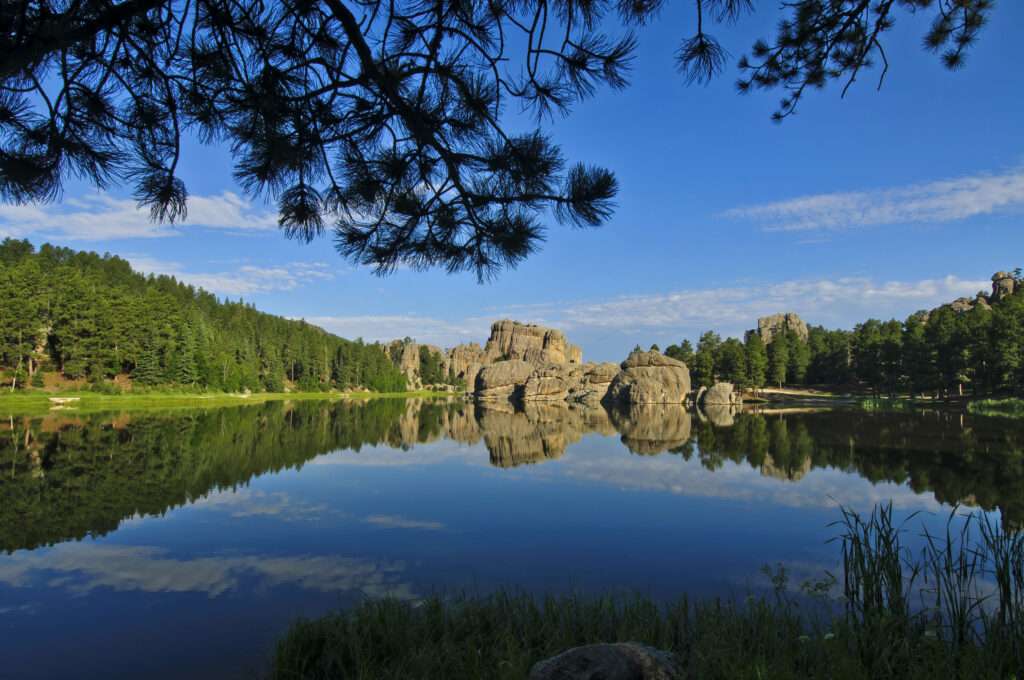
Sylvan Lake Campground in Custer State Park is small — around 39 sites — and sits beside a lake that was created in 1881 when a dam went in across Sunday Gulch, leaving granite spires standing directly in the water. The lake is fed by cold springs and snowmelt with almost no agricultural runoff, so the water stays clear enough to see the submerged rock ledges that swimmers use as diving platforms. The trailhead for Black Elk Peak, the highest point east of the Rockies, starts a few steps from the shoreline, which makes this the entry most likely to turn into a hiking trip.
What to Pack for Sylvan Lake
Folding utility wagon — Rated to 220 pounds and folds flat, which solves the walk from parking to site.
Quick-dry hiking pants — Lightweight and water-resistant, sensible for a seven-mile granite ascent that starts at a swimming hole.
Orienteering compass — Under ten dollars and useful in the Needles, where trail junctions multiply and phone signal does not.
Lake Ouachita State Park, Arkansas
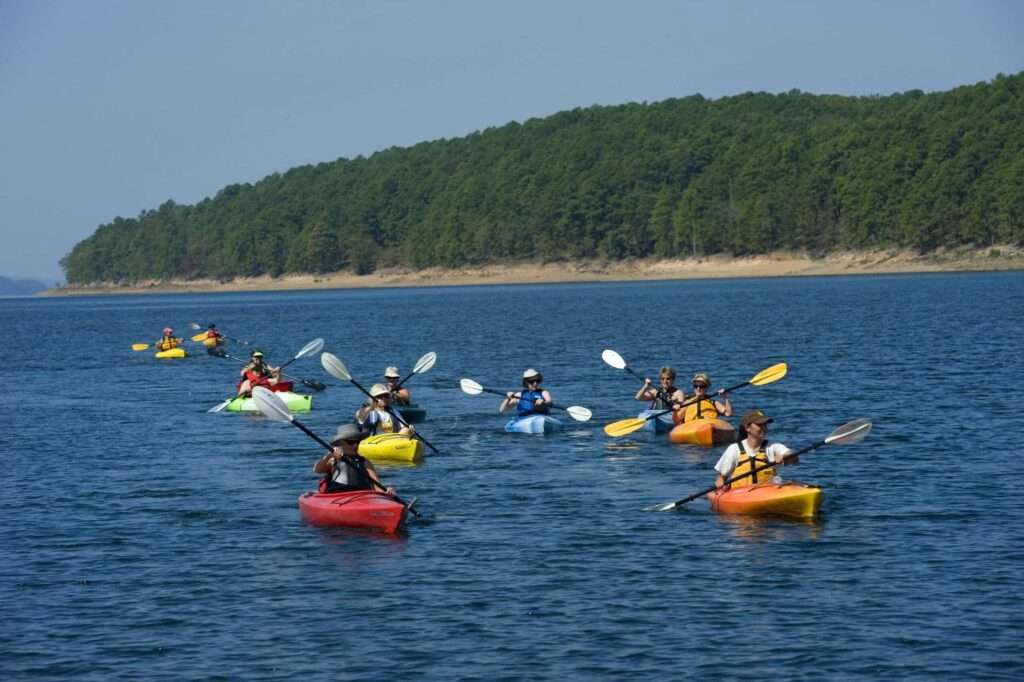
Lake Ouachita State Park sits on the eastern end of Arkansas’s largest lake, with around 100 campsites, and the lake is consistently rated among the cleanest in the United States because almost its entire 40,000-acre shoreline is undeveloped Ouachita National Forest. No houses, no lawns, and no farm runoff means visibility in the coves regularly runs 20 to 30 feet, which is why the lake has a genuine scuba community despite being nowhere near an ocean. Summer here is hot and humid rather than alpine, the water warms into the 80s, and the more than 200 islands are the main reason to bring a boat or a kayak.
What to Pack for Lake Ouachita
Mosquito repellent bracelets — A 50-pack of DEET-free bands, which is the right volume for an Arkansas summer.
Two-person camping loveseat — A folding double chair that packs down to one carry bag instead of two.
Squeeze water filter — Filters to 0.1 microns, worth carrying on island paddles where you will run out of water before you run out of daylight.
Clarity is seasonal on almost every lake here, and the general rule is that late summer beats early summer because spring snowmelt and runoff carry sediment that takes weeks to settle. Book the alpine lakes six months out, book the state parks as early as the system allows, and if you want more places worth the drive, our list of the best state parks in the USA is a good place to keep planning.