
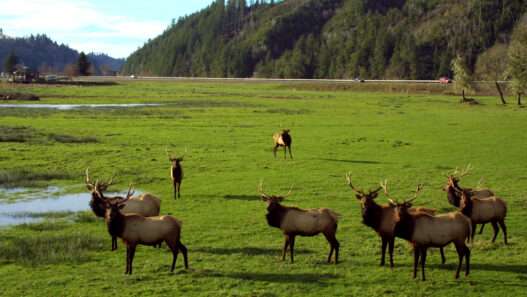


There is no sound in American wildlife quite like a bull elk bugling across a frost-covered meadow at dawn. It starts as a low growl, climbs into a whistle that seems far too high for a 700-pound animal, and finishes with a string of grunts that carry a mile on cold air. Between early September and late October, herds drop out of the high country into open valleys, bulls gather harems, and the whole spectacle plays out within camera range of a roadside pullout.
The trick is knowing where the elk actually stand during the rut and what time they show up, because a meadow that holds forty animals at 6:30 a.m. can be completely empty by nine. The twelve places below cover the Rockies, the Appalachians, the Ozarks, the Pacific coast, and a few spots most people never think to check.
1. Rocky Mountain National Park, Colorado
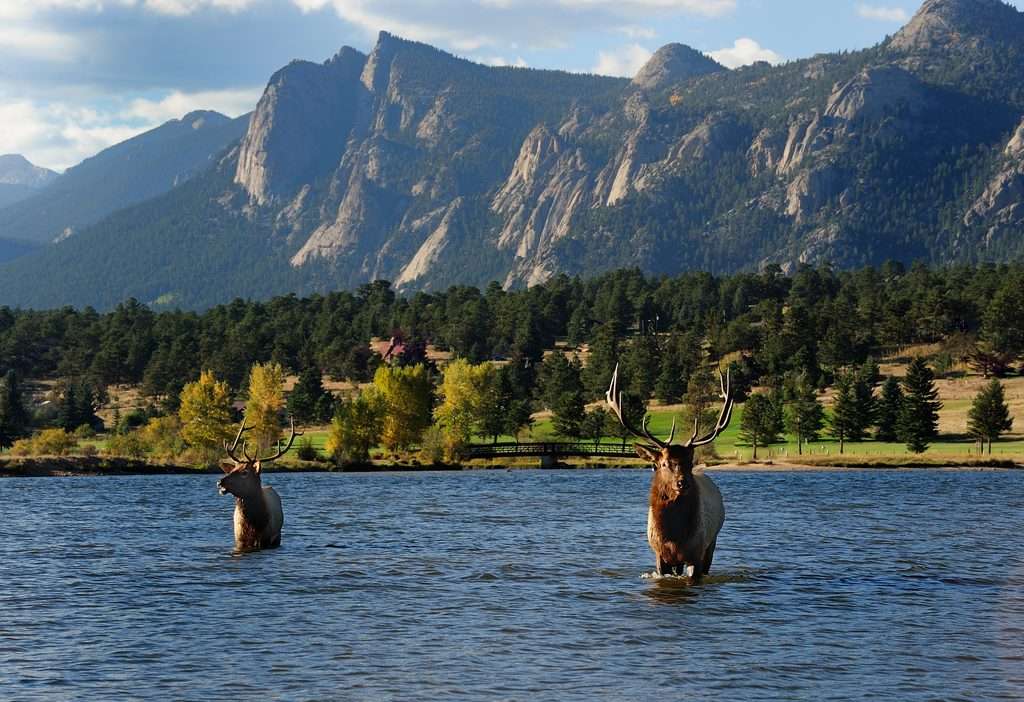
This is the elk rut most people picture, and for good reason — hundreds of animals drop into Moraine Park, Horseshoe Park, and Upper Beaver Meadows every fall, close enough to hear antlers clash from the shoulder of the road. The park closes those five meadow areas to foot traffic from 5 p.m. to 10 a.m., September 1 through October 31, which sounds restrictive but actually works in your favor since the elk stay relaxed and stay put. Timed entry reservations run through October 12, and the 9 a.m. to 2 p.m. window is exactly when the elk are lying down in the trees, so arrive before nine and skip the permit entirely.
Estes Park itself fills with elk during the rut, with bulls bugling on golf courses and in hotel parking lots like they own the place. Elevation at Moraine Park sits around 8,100 feet, and a clear September morning will start near freezing and hit 65°F by noon. Spotlighting and elk calling are both illegal here, so bring optics instead of gadgets and stay the required 75 feet back.
What to Pack for Rocky Mountain National Park
- A three-pack of thermal merino wool crew socks makes standing still in a 28°F meadow for two hours survivable.
- A solar and hand-crank NOAA weather radio matters here because cell service dies past Deer Ridge Junction and mountain storms build fast.
- A compact 20W power bank keeps your phone alive after cold mornings drain the battery by half.
Disclosure: This post contains Amazon affiliate links. I earn a small commission from qualifying purchases at no extra cost to you.
2. Cataloochee Valley, North Carolina
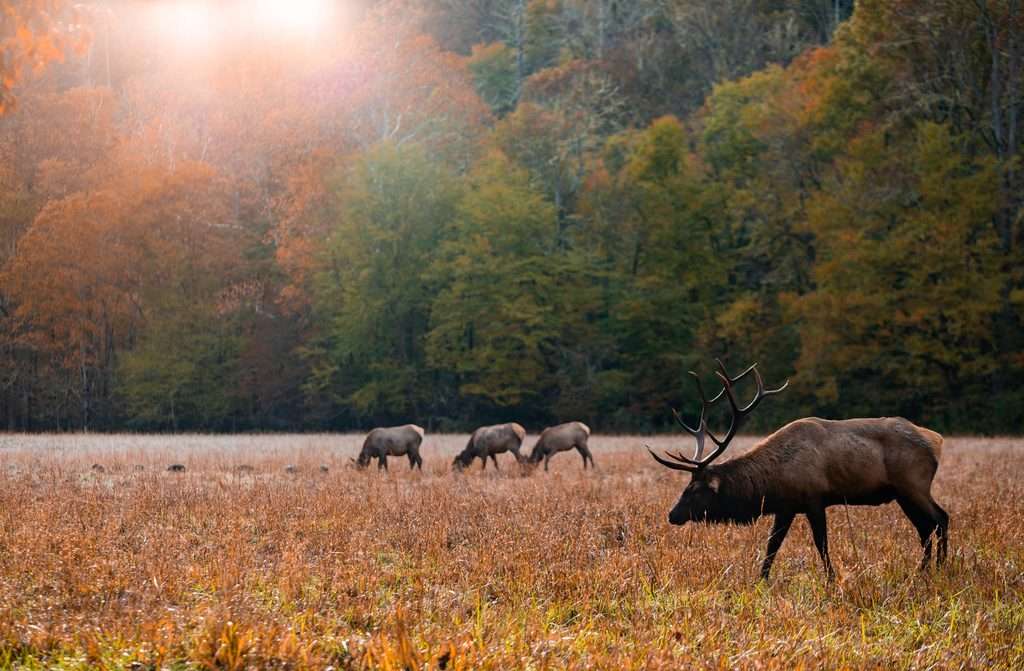
Elk were reintroduced to the Great Smoky Mountains in 2001 with just 25 animals, and the Cataloochee herd has become the single best elk-viewing experience east of the Mississippi. The valley is a bowl of old hayfields ringed by historic churches and homesteads, and bulls bugle across those fields at first light and again the last hour before dark. Hurricane Helene tore up the access roads in September 2024, so check current conditions before you commit — portions reopened in 2025, with parking near Beech Grove School and the upper valley walkable rather than drivable.
Getting in means Cove Creek Road off I-40 Exit 20, eleven miles of narrow, partly gravel switchbacks with no guardrails, and you should budget 45 minutes from the interstate no matter what your GPS claims. Fields are closed to all foot traffic in September and October, so the viewing happens entirely from the roadside with binoculars or a long lens. If the valley is closed, the Oconaluftee herd near Cherokee is the reliable backup and requires nothing more than a parking tag.
What to Pack for Cataloochee Valley
- A five-pack of disposable rain ponchos costs less than lunch and the Smokies average more than 80 inches of rain a year.
- A pair of low-slung folding camp chairs turns a two-hour roadside wait into something you actually enjoy.
- A set of polarized sunglasses cuts the glare off wet grass and helps you pick out antlers in the tree line.
3. Yellowstone National Park, Wyoming
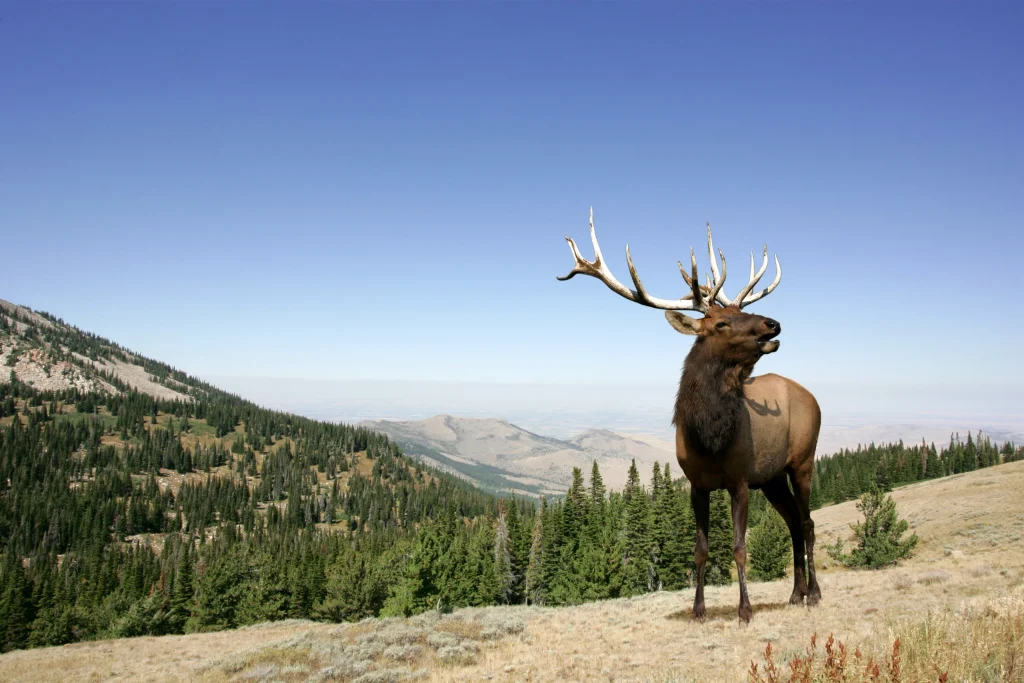
The Mammoth Hot Springs herd is the most famous urban elk problem in America — bulls bugle on the lawn of the old fort buildings, block the road to the terraces, and occasionally take on a parked car. Beyond Mammoth, the Madison River, Gibbon Meadows, and the Lamar Valley deliver rut action alongside bison, wolves, and pronghorn, which makes Yellowstone the best single stop for anyone who wants more than elk. Peak bugling runs mid-September through mid-October, and the crowds thin noticeably after Labor Day while animal activity spikes.
Morning temperatures at 6,200 feet routinely drop into the teens in October, and the park’s interior roads begin closing in early November. Rangers enforce a 25-yard minimum from elk and 100 yards from bears and wolves, and rutting bulls in Mammoth have injured visitors nearly every season. Give yourself three days minimum, because the drive between Mammoth and Lamar alone eats ninety minutes each way.
What to Pack for Yellowstone
- A pocket-sized 4K gimbal camera stabilizes handheld video at dawn without hauling a tripod through frozen sage.
- An oversized waterproof ground blanket gives you a dry place to sit when every pullout is soaked with frost melt.
- A stainless steel camp kettle is the difference between a miserable 5 a.m. wait and a good one.
4. National Elk Refuge and Grand Teton, Wyoming
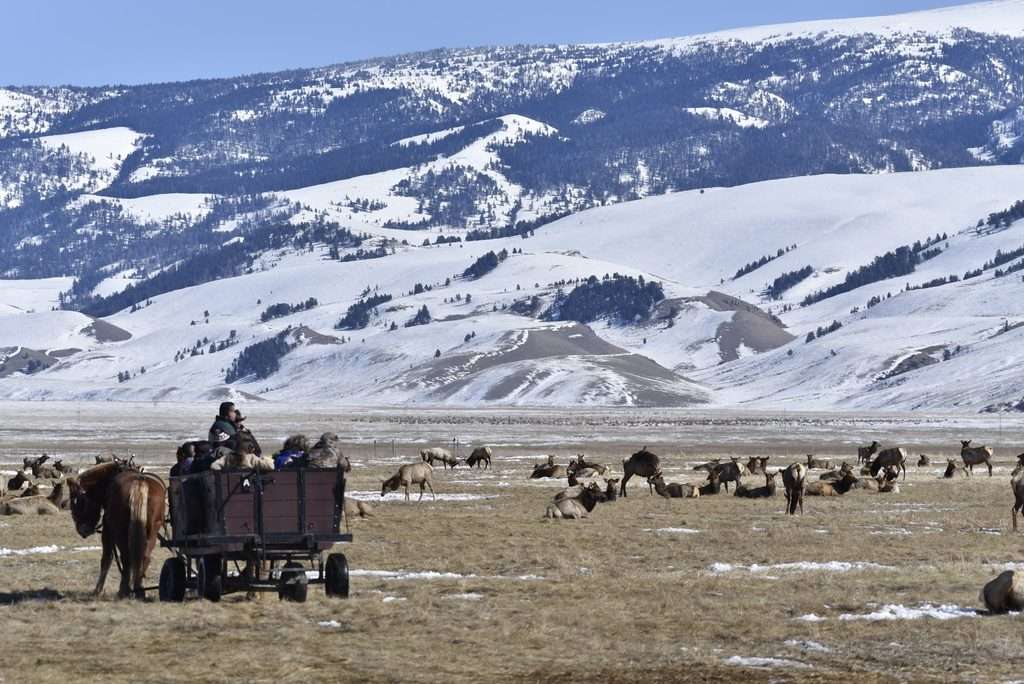
The National Elk Refuge outside Jackson protects nearly 25,000 acres of winter range, and the shoulder season in late September and October catches elk moving down from the Tetons with the Gros Ventre and Snake River bottoms still green. Grand Teton’s Elk Ranch Flats, Antelope Flats, and the Gros Ventre campground loop are all reliable bugling spots with the Cathedral Group standing behind them, which is the most photogenic backdrop on this entire list. Moose rut here at the same time, so a single morning can hand you bugling bulls, sparring moose, and a bald eagle over the river.
Jackson Hole sits at 6,200 feet and October mornings frequently start in the low 20s before climbing 40 degrees by afternoon. The refuge’s famous horse-drawn sleigh rides do not start until mid-December, so fall viewing is all done from pullouts and the Refuge Road east of town. Book lodging early — Jackson prices stay high through leaf season and the elk crowd overlaps with photographers chasing aspens.
What to Pack for Grand Teton and the Elk Refuge
- A cold-weather backpacking sleeping bag handles the Gros Ventre campground, where overnight lows hit the 20s in October.
- A waterproof UPF 50+ wide-brim hat protects you from high-altitude sun that is far stronger than the air temperature suggests.
- A set of compression packing cubes keeps four layers of clothing organized for mornings that swing 40 degrees.
5. Benezette, Pennsylvania
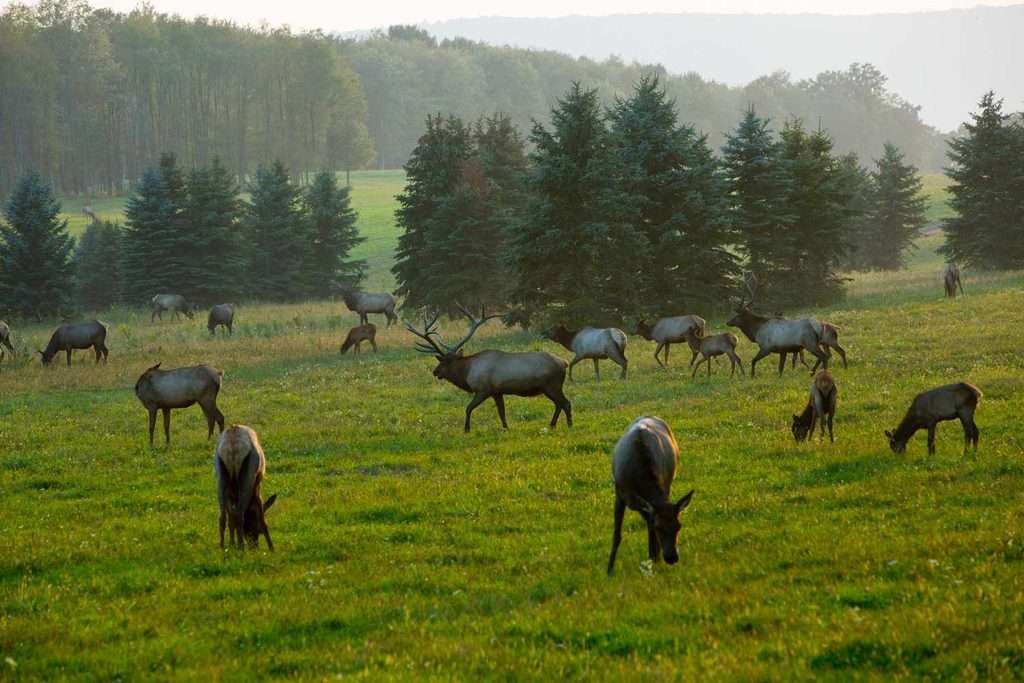
Pennsylvania holds 1,000 to 1,200 free-ranging elk across ten counties, and Benezette sits at the center of it with roughly 300 animals living in the area full-time and more arriving for the rut. The Elk Country Visitor Center on Homestead Drive anchors the experience with three observation trails, live elk cams, and staff who can tell you where the bulls were that morning. Descendants of 177 Rocky Mountain elk shipped from Yellowstone between 1913 and 1926, this herd is the reason a town of 200 people sees up to 5,000 visitors a day during peak rut.
Bugling runs mid-September through mid-October, and the best viewing happens at dawn and dusk from the visitor center meadows, Winslow Hill, Dents Run, and the covered blind at Hicks Run twelve miles out on Route 555. Weekend traffic on Winslow Hill Road genuinely backs up, so a weekday sunrise is worth the vacation day. Locals are patient but tired of cars stopped dead in the middle of the road, so use the designated pull-offs.
What to Pack for Benezette
- A 4K creator camera combo with a wireless mic captures the bugle itself, which is half of what makes this trip worth the drive.
- A nylon web hiking rigger belt holds up under a loaded jacket on the visitor center observation trails.
- A zippered weatherproof gear pouch keeps memory cards and spare batteries dry in Pennsylvania’s reliable October drizzle.
Disclosure: This post contains Amazon affiliate links. I earn a small commission from qualifying purchases at no extra cost to you.
6. Boxley Valley, Arkansas
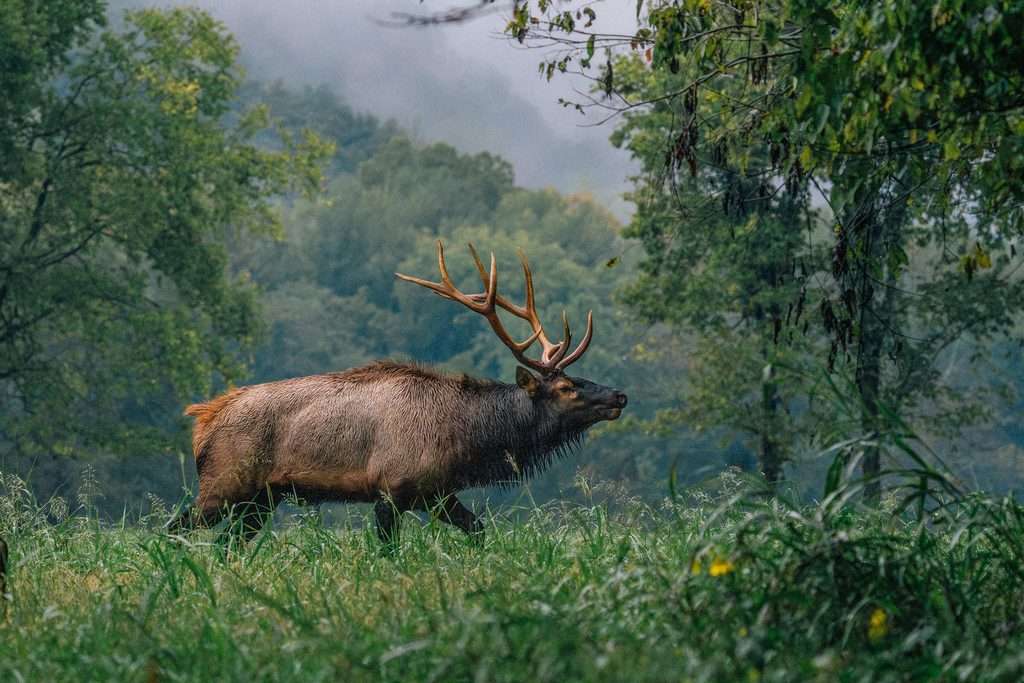
Arkansas restored elk to the Buffalo National River in 1981 with 112 animals, and the herd now runs close to 500 across more than 315,000 acres of Ozark hill country. The reliable viewing stretch is roughly six miles of Highway 43 and Highway 21 between Ponca and Boxley, where bulls graze open pasture just after sunrise and again in late afternoon. Morning fog burning off the valley floor while three bulls bugle at each other is the specific image people drive from Little Rock and Tulsa for.
October is the prime month, and the elk often stay in the open until 10 or 11 a.m. depending on cloud cover, which gives late risers a real chance. The Ponca Elk Education Center on the main drag gives daily updates on where the herds have been feeding, and it costs nothing to stop in. Pull completely off the highway when you park, because AR-43 is a working through-road and not everyone is slowing down for wildlife.
What to Pack for Boxley Valley
- A compact sand-free ground blanket packs down small and handles the heavy dew that coats every Ozark pasture at dawn.
- A five-stage filtered water bottle is worth carrying on the Lost Valley and Centerpoint trails nearby.
- A two-pack of floatable waterproof phone pouches protects your phone if you pair elk viewing with a float on the Buffalo.
7. Valles Caldera National Preserve, New Mexico
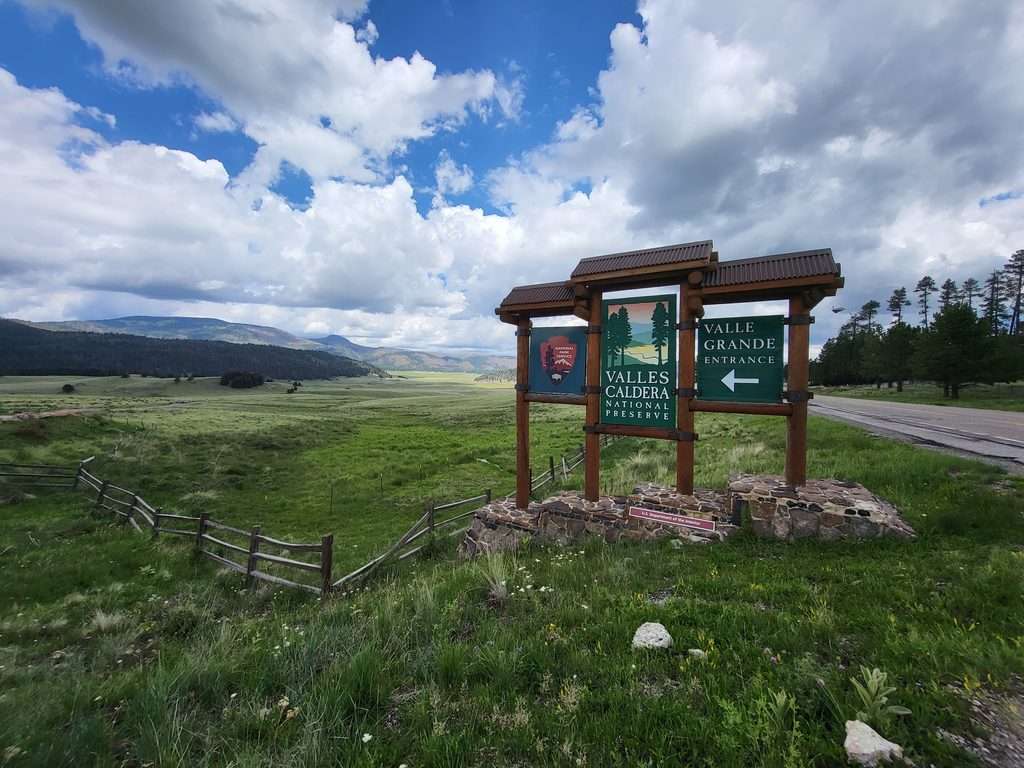
A volcanic eruption 1.25 million years ago left a 13-mile-wide grass bowl in the Jemez Mountains, and that bowl now holds one of New Mexico’s largest elk herds. The Valle Grande meadow is so vast that you can watch multiple harems working separate corners of it at the same time, with bugles echoing off the caldera walls in a way no forested valley can match. The Park Service runs a Jemez Mountains Elk Festival most years in late September, timed to the start of the rut and packed with ranger-led hikes and talks.
The preserve floor sits above 8,500 feet, so September mornings hover near freezing while afternoon UV is brutal and the air is bone dry. Access is through the entrance station on NM-4, and backcountry vehicle permits for the interior roads are limited and worth reserving. Santa Fe is about 90 minutes away, which makes this a genuinely easy add-on to a New Mexico road trip.
What to Pack for Valles Caldera
- A UPF 50+ long-sleeve sun shirt handles high-desert sun at 8,500 feet better than sunscreen alone.
- A three-pack of 100% cotton bandanas covers dust, sweat, and the wind that rips across an open caldera.
- A cordless LED work light helps at the trailhead before dawn, since the preserve has no lighting anywhere.
8. Custer State Park, South Dakota
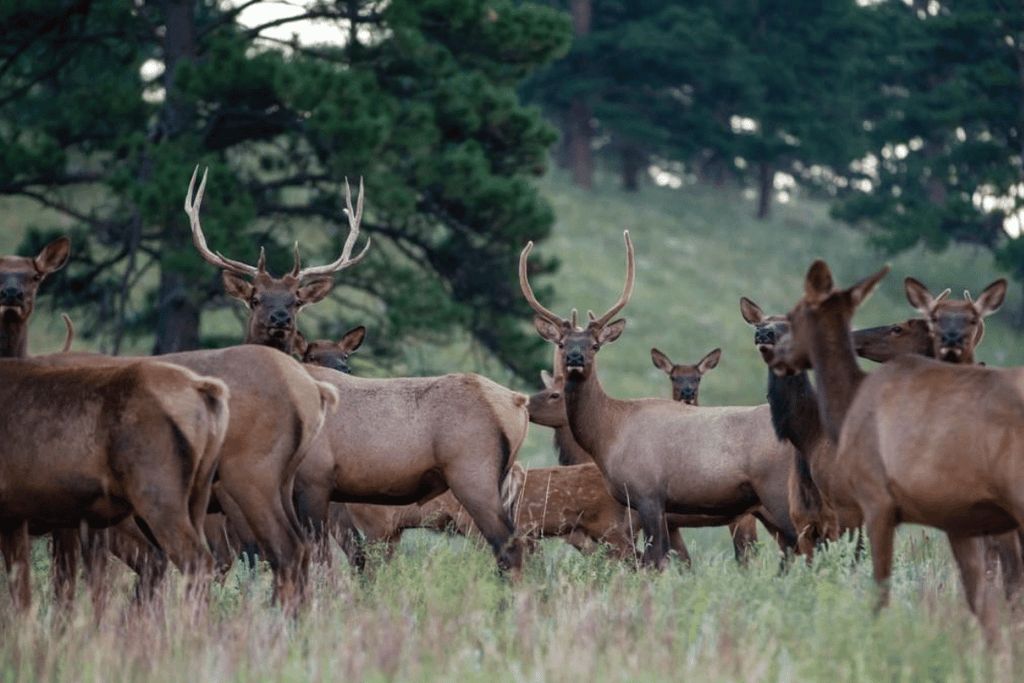
Custer State Park packs 71,000 acres of Black Hills granite, ponderosa forest, and open prairie into one drive, and elk bugle here alongside a 1,500-head bison herd, bighorn sheep, and the famous begging burros. The Wildlife Loop Road is the headline attraction, but elk activity concentrates in the quieter meadows near Iron Creek and along the French Creek drainage at dawn. The park’s annual Buffalo Roundup falls in late September, which doubles the wildlife spectacle and roughly triples the crowd on that one weekend.
Bugling peaks in mid to late September, overlapping with aspen and birch color in the higher draws. Wind Cave National Park sits directly south and adds another elk population plus one of the world’s longest cave systems, so the two parks pair naturally into a long weekend. Park entrance passes are valid for seven days, and the Sylvan Lake and Legion Lake campgrounds stay open into October.
What to Pack for Custer State Park
- A backpacking mess kit covers coffee and breakfast at a campsite before the Wildlife Loop even opens up.
- A three-inch memory foam camping mattress makes a cold Black Hills night in the back of an SUV genuinely comfortable.
- A travel packing cube set keeps a week of layers sorted across multiple park campgrounds.
9. Dean Creek Elk Viewing Area, Oregon
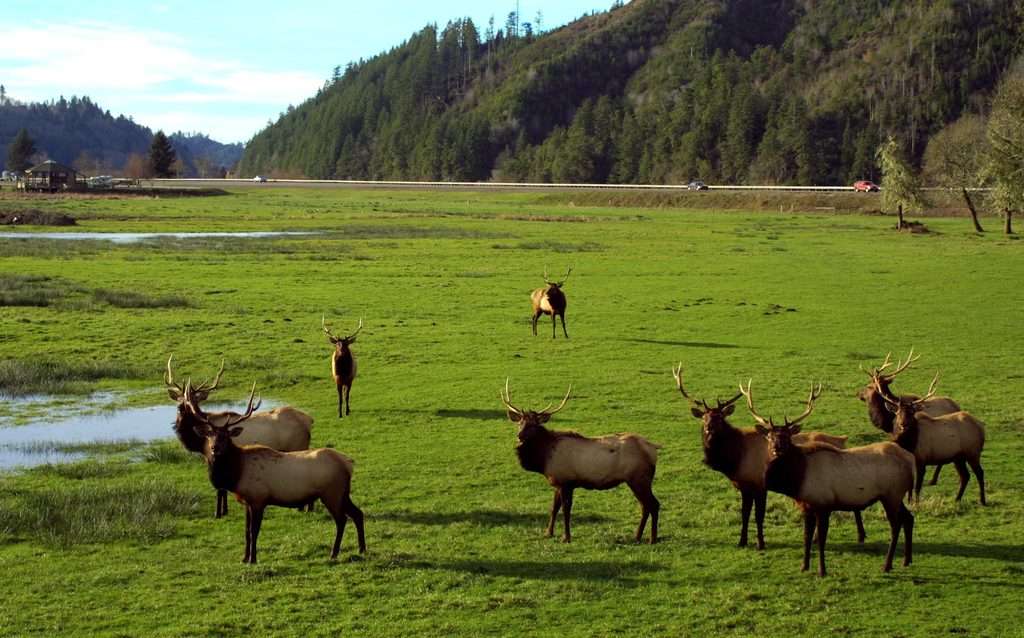
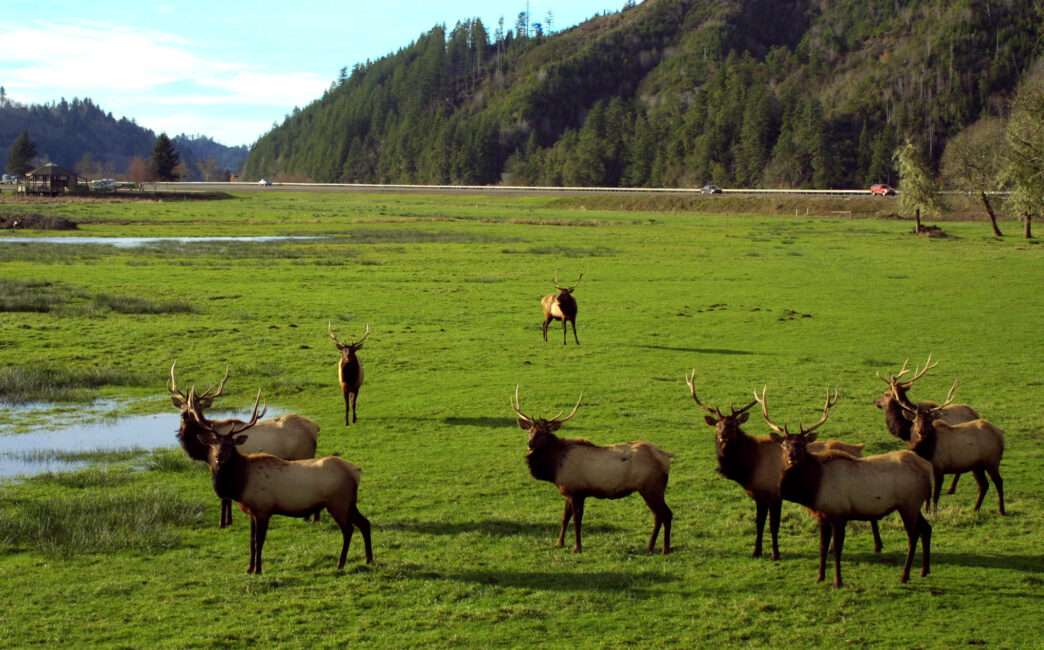
Roosevelt elk are the largest elk subspecies in North America, and Dean Creek on Highway 38 east of Reedsport protects 1,000 acres of tidal meadow and forest where 60 to 100 of them live year-round. Two paved viewing pullouts with interpretive panels sit directly on the highway, which means this is the rare elk destination that requires zero hiking and zero permits. Bulls bugle through September and October in the open pasture along the Umpqua River, often within 100 yards of the parking area.
Coastal Oregon in fall means rain, fog, and mud, so plan on gray skies rather than golden light. The site is open every day of the year with no fee, and combining it with the Oregon Dunes twenty minutes west makes for a strong single-day itinerary. Early morning and the last hour of daylight are still the best windows, though overcast days keep the animals out far longer than they stay out in the Rockies.
What to Pack for Dean Creek
- A lightweight two-person tent with a rain fly handles the coastal campgrounds around Reedsport and Winchester Bay.
- An inline RV water filter is a smart add if you are doing the Oregon coast in a camper van.
- A tube of professional-grade boot repair adhesive has saved more than one soggy Pacific Northwest trip from a blown sole.
10. Prairie Creek Redwoods State Park, California
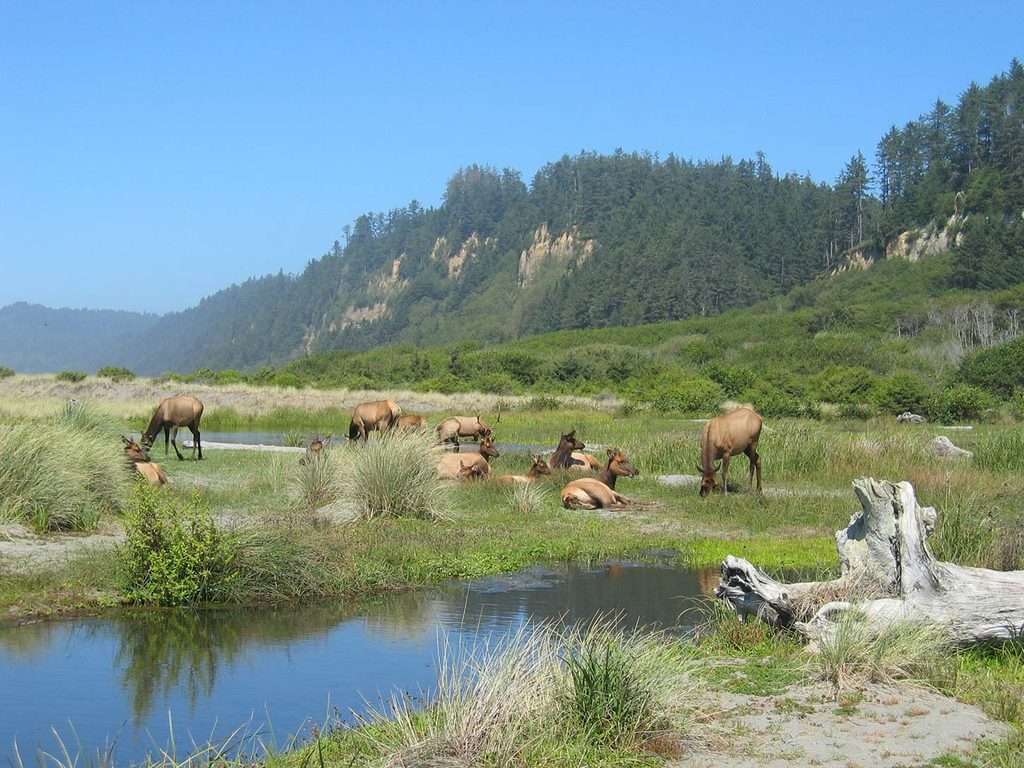
Elk Meadow and Elk Prairie sit inside a redwood forest, which produces the strangest elk viewing in the country — 900-pound Roosevelt bulls bugling under 300-foot trees. The herds here are habituated to people and stay in the open grass along Newton B. Drury Scenic Parkway and near the Elk Meadow Day Use Area most of the day, not just at dawn. Rut season runs late August into October, and the coastal fog rolling through the trunks while a bull screams is worth the drive up US-101 on its own.
Prairie Creek connects directly to Redwood National Park, so a single trip covers old-growth groves, Fern Canyon, and Gold Bluffs Beach. Temperatures stay mild — usually 50 to 65°F — but the humidity is constant and everything stays damp. Keep at least 50 yards between you and any bull, because these animals are comfortable with humans and that comfort makes them less predictable, not more.
What to Pack for Prairie Creek Redwoods
- An 18-piece cook set with a backpacking stove works well at Elk Prairie Campground, which sits right on the meadow.
- A six-set of ultralight compression packing cubes keeps damp coastal clothing separated from dry layers.
- A ferro rod fire starter earns its place when everything you try to light has been sitting in fog for three days.
11. Hoh Rain Forest, Olympic National Park, Washington
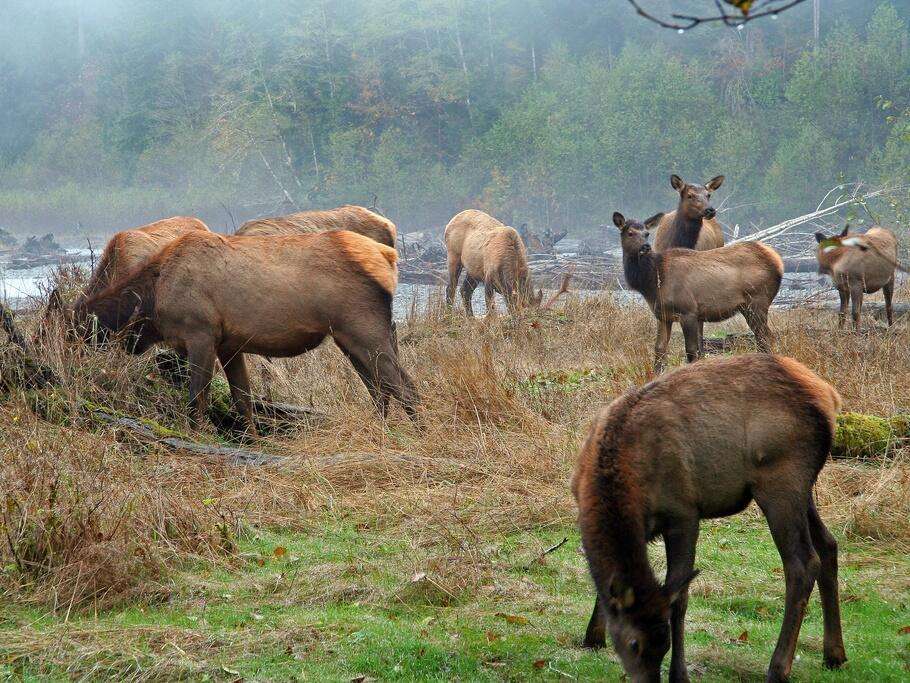
The Hoh holds the largest unmanaged herd of Roosevelt elk anywhere, and the subspecies is named after Theodore Roosevelt, who pushed to protect this exact population. Elk here move through moss-draped Sitka spruce and bigleaf maple along the Hoh River, and the bugle sounds different in dense rainforest — muffled, closer, and considerably more unsettling. The Hall of Mosses and Spruce Nature Trail put you in elk habitat within a mile of the visitor center, and the herds also use the river bars along the Hoh River Trail.
The Hoh receives 12 to 14 feet of rain a year, most of it starting in October, so waterproofing is not optional here. Rut runs September into early October, and the valley road from US-101 is 18 miles of one-lane-feeling pavement that fills up by mid-morning. Kalaloch and Quinault on the coast side hold their own elk herds if the Hoh parking lot is already full.
What to Pack for the Hoh Rain Forest
- A portable changing and shower tent gives you somewhere private to strip out of soaked layers at a campsite.
- An electric heating pad throw is the single best thing to plug in back at the cabin after a rainforest morning.
- A five-pack of lightweight everyday crew socks matters more than you think when every pair you own ends up wet.
Disclosure: This post contains Amazon affiliate links. I earn a small commission from qualifying purchases at no extra cost to you.
12. Eastern Kentucky Elk Country
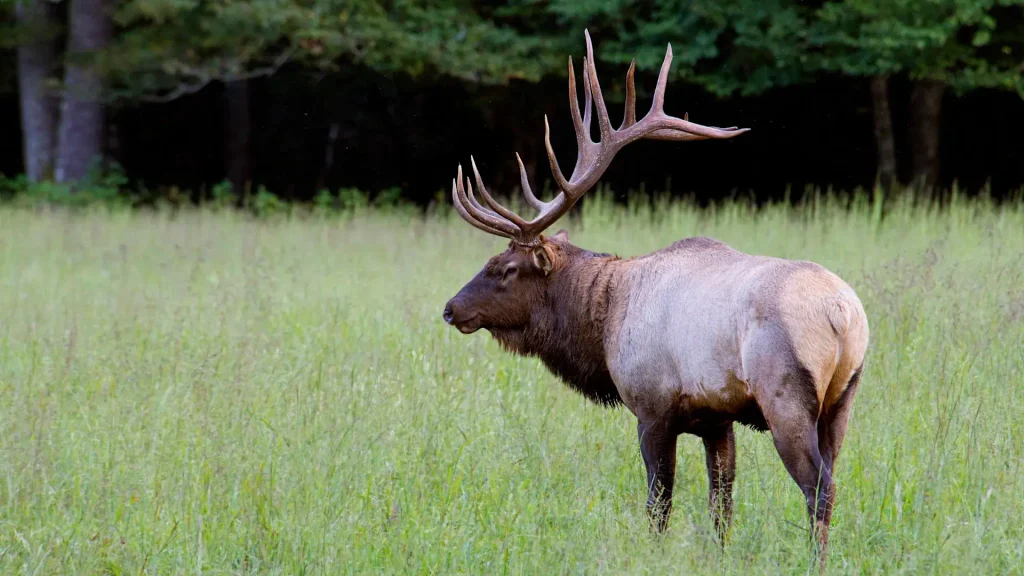
Kentucky’s restoration program built the largest free-ranging elk herd east of the Rockies, now numbering well over 10,000 animals across a 16-county zone in the eastern coalfields. Reclaimed strip-mine benches turned into grassland created near-perfect habitat, and those high open plateaus around Knott, Perry, Breathitt, and Pike counties are where the bugling happens. Guided elk tours out of Hazard and the Elk Capital of the East program run through September and October and get you onto private mine land that you cannot legally reach on your own.
The Boone’s Ridge project near Bell County has added a purpose-built wildlife viewing destination to the region, and the surrounding Appalachian ridges hit peak color in mid to late October. Roads into the viewing areas are gravel, steep, and frequently rutted, so a high-clearance vehicle helps and a guided tour helps more. Book tours weeks ahead — the September and October slots fill fast and there are only so many vans.
What to Pack for Eastern Kentucky
- A five-piece hardside luggage set handles a longer Appalachian road trip if elk are one stop among several.
- A 35-gallon lockable storage tote keeps boots, optics, and rain gear contained in a truck bed on gravel mine roads.
- A pack of leakproof disposable urinal bags sounds unglamorous until you are two hours deep on a backroad with no facilities.