


The best swimming holes in America hide in canyon bottoms, spring-fed caves, and gorges you have to earn on foot, and they deliver the kind of water that makes a chlorinated pool feel like a compromise. Some are glassy turquoise pools fed by mineral springs that hold the same temperature all year, others are cold mountain chutes carved straight into the rock, and a few sit at the end of a hike long enough to keep the crowds thin.
1. Havasu Falls, Arizona
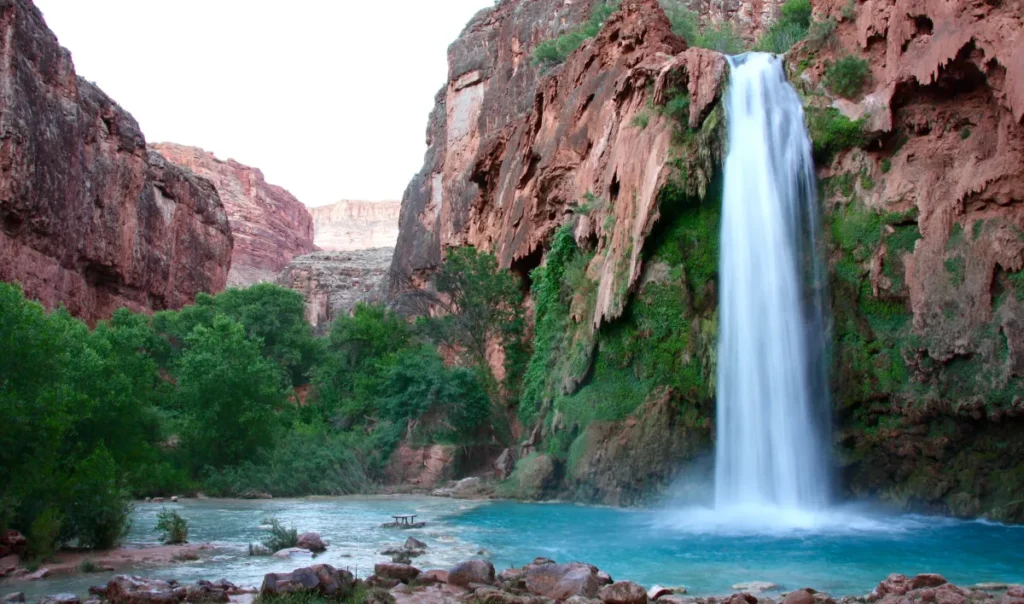
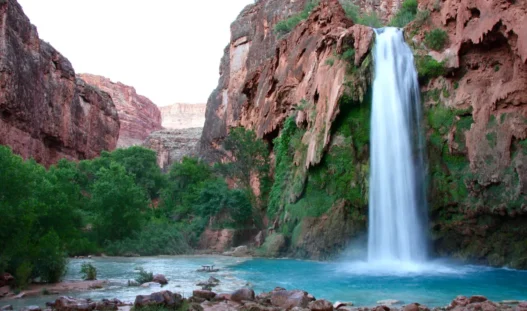
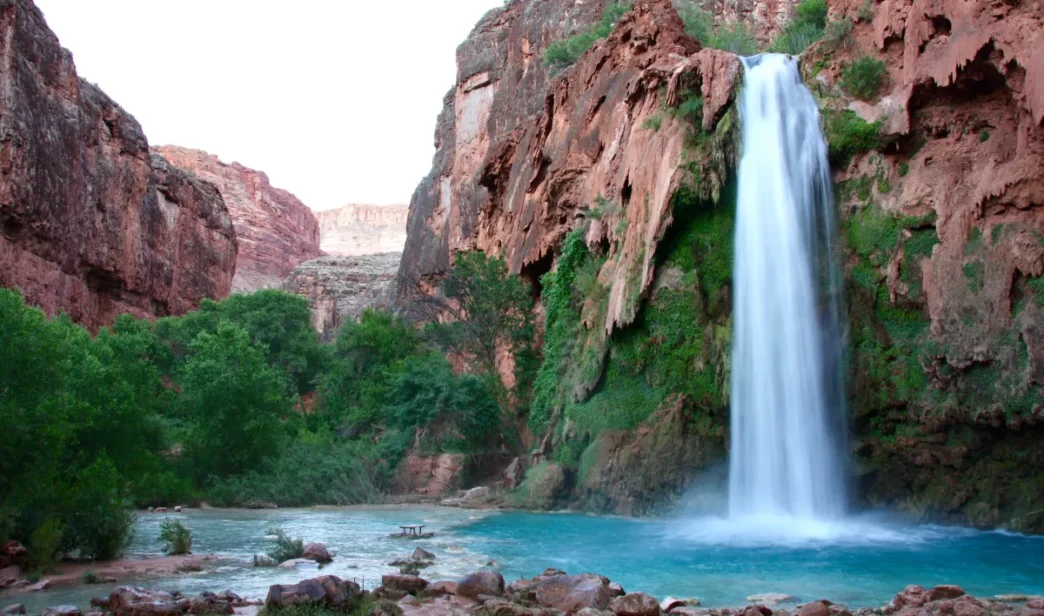
Havasu Falls sits deep on Havasupai tribal land near the Grand Canyon, and its impossibly blue-green water gets that color from travertine and calcium carbonate dissolved in the creek, not from any filter or edit you’ve seen online. Reaching it is not a casual afternoon plan, since the trailhead at Hualapai Hilltop drops you into a roughly 10-mile hike each way, and a permit plus an overnight camping reservation are mandatory before you ever lace up. The payoff is a wide, terraced plunge pool beneath a 100-foot waterfall, warm enough to linger in and remote enough that you’ll remember the swim long after your legs forgive you for the walk out.
What to Pack for Havasu Falls
- Earth Pak Waterproof Backpack — a roll-top dry pack that seals completely and even includes a waterproof phone case, built for creek crossings and a long dusty haul.
- Trekking poles — the loose, sandy switchbacks near the top are far easier on the knees with poles in hand.
- Electrolyte powder — desert heat pulls salt out of you fast, and plain water alone won’t cover a full day of hiking.
- Water shoes — the creek crossings and slick travertine ledges are no place for bare feet.
As an Amazon Associate, I earn from qualifying purchases.
2. Jacob’s Well, Texas
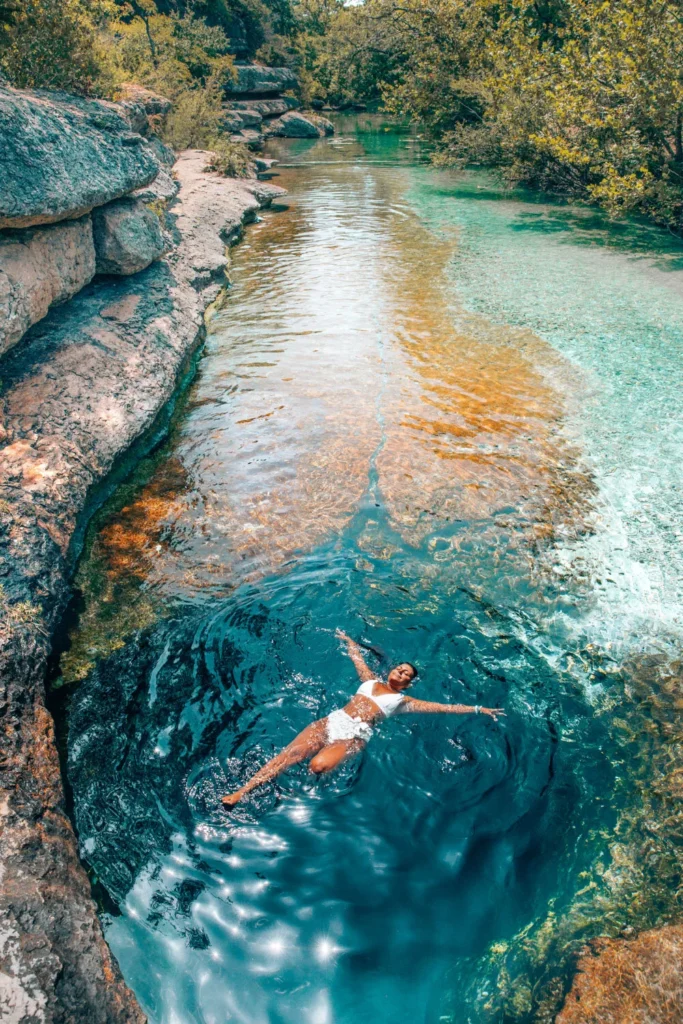
Jacob’s Well in Wimberley, Texas is an artesian spring that opens as a roughly 12-foot-wide mouth in the creek bed and drops into one of the longest underwater cave systems in the state. The surface pool is a beloved local swimming and jumping spot with water that stays around a bracing 68°F year-round, though the cave passages below are strictly for trained, experienced divers and have claimed lives, so the fun stays up top. Summer visits require a reservation through the Hays County parks system, and getting an early slot is the difference between a serene morning swim and a packed midday scene.
What to Pack for Jacob’s Well
- Swim goggles — the water is clear enough that a good pair turns the spring mouth into a window worth looking through.
- Waterproof dry bag — keeps your phone, keys, and reservation confirmation dry while you’re in the water.
- Rash guard — a light long-sleeve top blocks the Texas sun during the wait for your swim window.
- Blue Lizard Sensitive Mineral Sunscreen SPF 50 — 100% mineral with no chemical filters and organic aloe, a reef-conscious choice that won’t leave a heavy white cast on a bright Texas afternoon.
3. Blue Hole, New Mexico
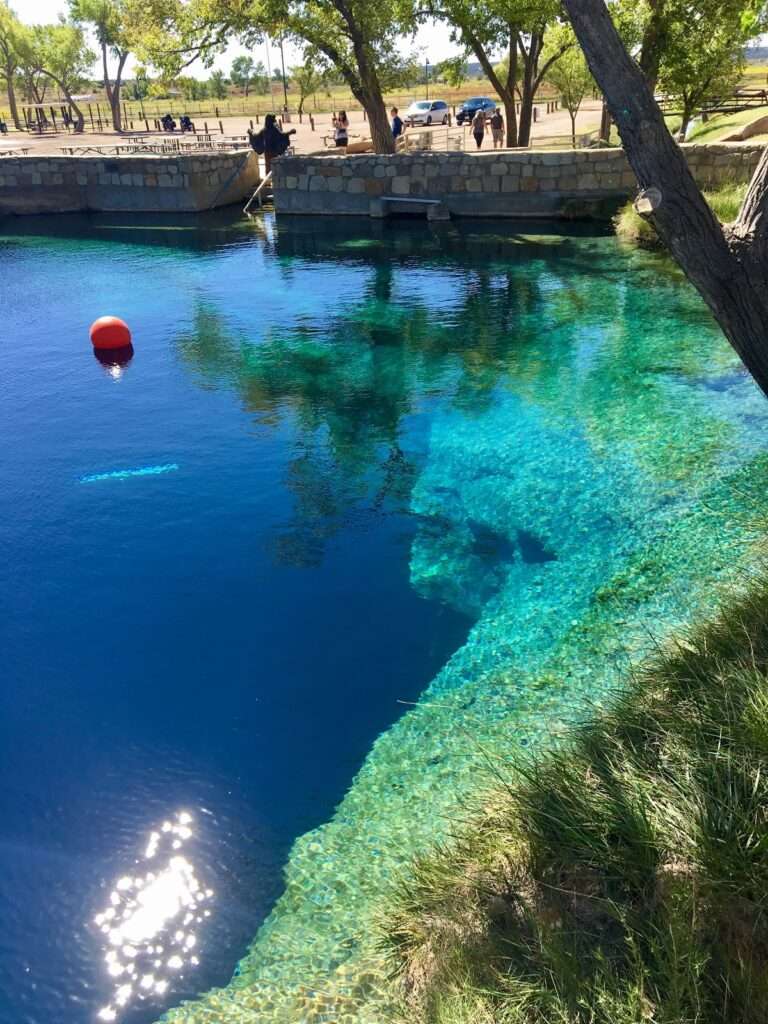
The Blue Hole in Santa Rosa, New Mexico is a bell-shaped artesian spring that widens dramatically underwater, plunging to about 80 feet with visibility that regularly reaches the bottom. Fed by a constant flow, it holds a steady 61°F in every season, which is why it draws scuba divers from across the region to train in its clear, predictable conditions even in the middle of a desert. The surface is open to swimmers and snorkelers too, and the combination of that startling clarity and the arid brown landscape around it makes the whole thing feel slightly unreal in person.
What to Pack for Blue Hole
- Neoprene wetsuit top — the steady 61°F water gets cold quickly, and a neoprene layer buys you far more time in it.
- QingSong Full Face Snorkel Mask — a 180-degree panoramic view with an anti-fog, anti-leak seal and a built-in camera mount, made for water this clear.
- Waterproof phone pouch — protects your device from splashes while still letting you shoot photos.
- Microfiber beach towel — packs down small and dries fast for the drive back across the desert.
As an Amazon Associate, I earn from qualifying purchases.
4. Sliding Rock, North Carolina
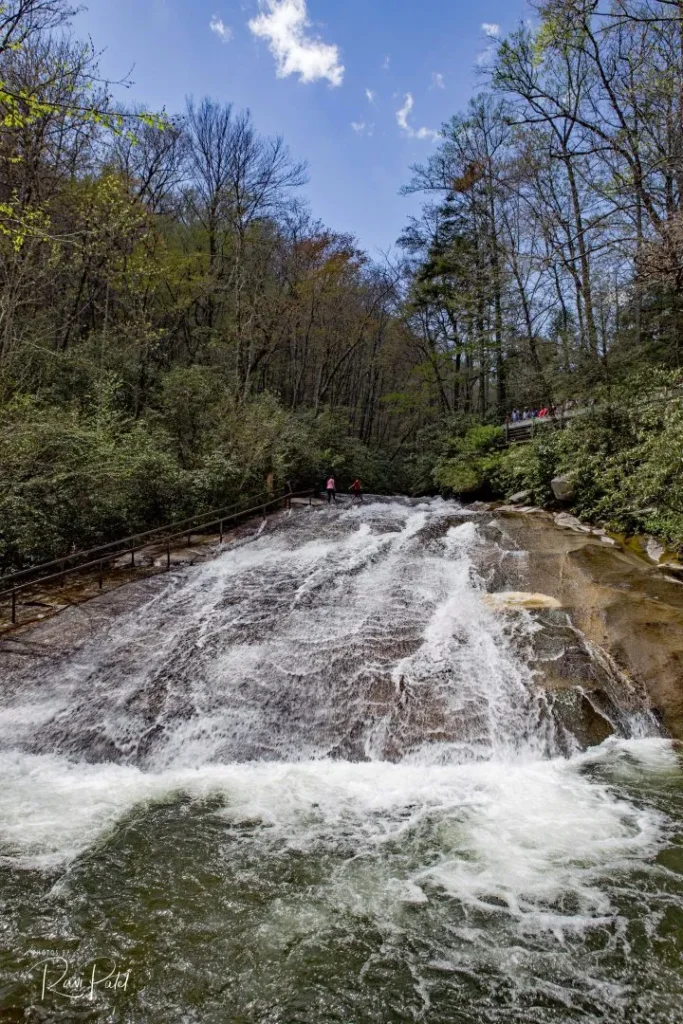
Sliding Rock in North Carolina’s Pisgah National Forest is exactly what it sounds like: a 60-foot natural waterslide worn smooth by centuries of mountain runoff, ending in a chilly plunge pool at the bottom. The water comes straight off the mountains and rarely climbs past the 50s and low 60s Fahrenheit, so the shriek you’ll hear from every first-timer is entirely justified and part of the whole experience. Lifeguards are on duty during the summer season and a small entry fee applies, which makes it one of the more family-friendly spots on this list despite the cold-water shock.
What to Pack for Sliding Rock
- Board shorts — durable shorts hold up far better than a thin swimsuit against the rough rock face.
- Neoprene water socks — they take the sting out of the cold and give you grip on the walk back up.
- Waterproof action camera — the ride down is the shot everyone wants, and a mounted camera captures it hands-free.
- Dreamon Beach Sand Toys (10-Piece) — a collapsible bucket, sifter, shovel, and rake in a drainable mesh bag keep younger kids busy on the bank between cold plunges.
5. Cummins Falls, Tennessee
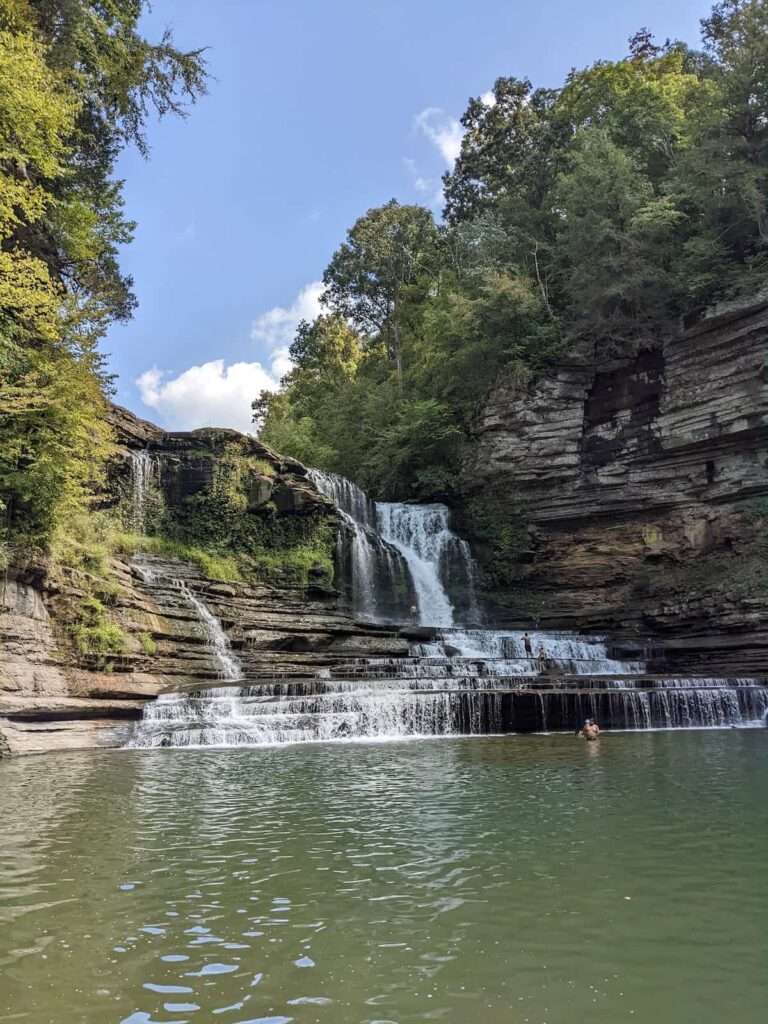
Cummins Falls near Cookeville, Tennessee is a 75-foot waterfall tumbling into a broad swimming basin that ranks among the most photographed in the state. The catch is the approach, since reaching the base means a gorge hike with slippery rock and multiple river crossings, and the park requires a separate gorge access permit on top of admission. Flash flooding is a real danger here after rain, so checking conditions before you go is not optional, but on a clear summer day the pool below the falls is about as good as a Tennessee swim gets.
What to Pack for Cummins Falls
- Insulated water bottle — the humid gorge hike goes better with cold water you actually want to drink.
- Packable sun hat — folds into a pocket and shields you on the exposed stretches of trail.
- SPLF Reusable Storage Bags (12-Pack) — BPA-free, leakproof, and dishwasher safe, perfect for sealing a wet swimsuit or a phone before the river crossings.
- First aid kit — a small one covers the scrapes that slick gorge rock hands out freely.
6. Homestead Crater, Utah
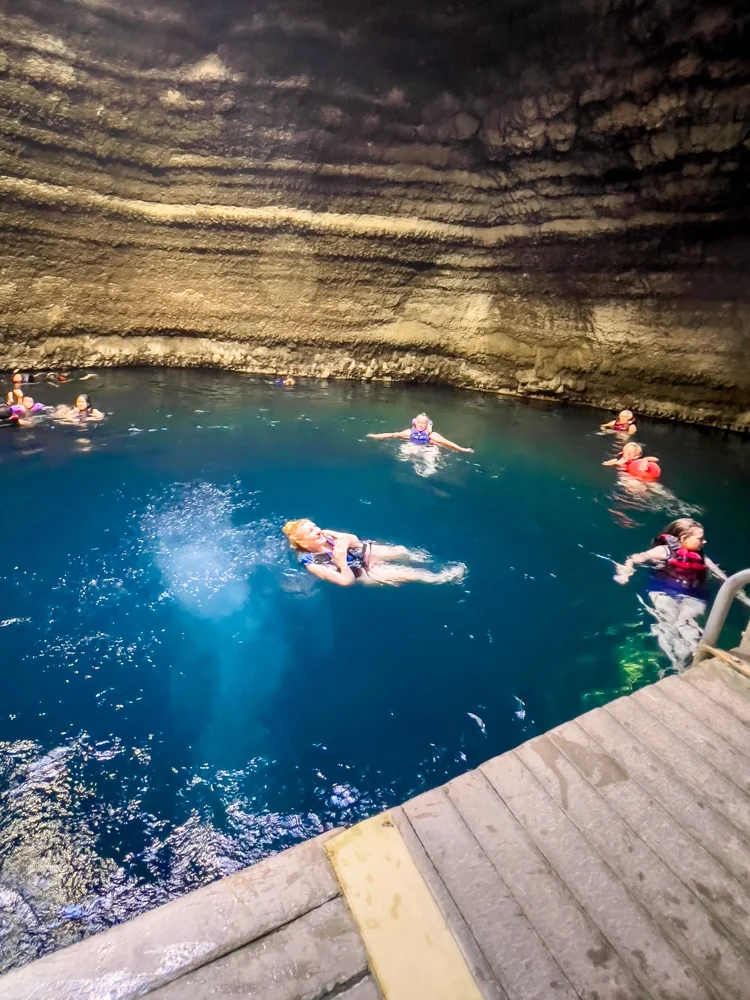
The Homestead Crater in Midway, Utah is a 55-foot-tall geothermal dome of beehive-shaped limestone with a warm mineral pool hidden inside its hollow core. The water sits between a comfortable 90 and 96°F year-round, making this a rare swimming hole you can enjoy in the dead of a Utah winter while snow piles up outside the crater walls. Access is by reservation only, and the sheltered dome is a favorite for soaking, snorkeling, and even scuba certification, since the depth reaches about 65 feet at the bottom.
What to Pack for Homestead Crater
- Snorkel set — the warm, calm water inside the dome is built for slow, easy snorkeling.
- FeFu Beach Towel Clips (8-Pack) — 5.1-inch heavy-duty clips that lock your towel to a railing or bench so it isn’t soaked through by the time you climb out.
- Underwater camera — the light filtering through the crater opening makes for genuinely strange, striking shots.
- Water sandals — grippy soles handle the wet walkways around the pool.
7. Ginnie Springs, Florida
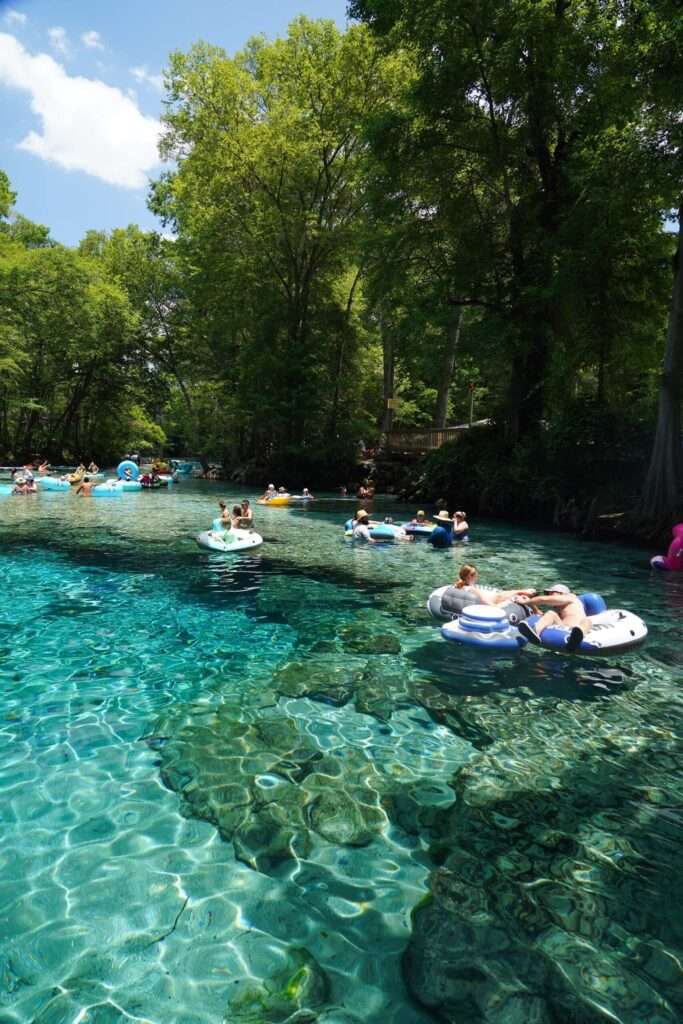
Ginnie Springs in High Springs, Florida is a private park on the Santa Fe River where crystal-clear spring water bubbles up at a constant 72°F, warm enough for an all-day float and cool enough to feel refreshing in the Florida heat. The main spring and its connected runs are ideal for tubing, snorkeling, and cavern diving, and the visibility is so consistent that it’s a go-to training ground for divers across the Southeast. Camping on site turns a day trip into a weekend, and the mix of shaded riverbank and open spring pools gives you room to spread out even on a busy Saturday.
What to Pack for Ginnie Springs
- SLOOSH Inflatable Pool Float Chairs (2-Pack) — heavy-duty lounge floats that inflate fast and keep you reclined and drifting down the calm spring run for hours.
- Floating pool lounger — a second style of lounger for anyone in the group who wants to stretch out flat.
- Floating keychain — cheap insurance so your keys don’t sink to the bottom of a spring.
- Soft cooler — keeps drinks and snacks cold through a full day on the riverbank.
8. Devil’s Bathtub, Virginia

Devil’s Bathtub in Virginia’s Jefferson National Forest is a deep, emerald-green pool carved into the rock along the Devil’s Fork Loop Trail, and its color alone has turned it into one of the most sought-out hikes in Appalachia. Getting there is a genuine trek with more than a dozen creek crossings, so wet feet are guaranteed and sturdy footing matters, which keeps this one honest and rewards the people willing to work for it. The pool itself is cold, clear, and small, best enjoyed early before the trail fills up on summer weekends.
What to Pack for Devil’s Bathtub
- Quick dry travel towel — with that many crossings, a towel that dries fast is worth its weight.
- Bug spray — the shaded, damp trail is prime mosquito country in summer.
- EDC Bottle Opener Keychain (3-Pack) — a slim stainless steel pry bar, flathead, and bottle opener in one, the kind of trail multi-tool you forget you’re carrying until you need it.
- Headlamp — the round trip runs long, and you don’t want to be finishing those creek crossings in the dark.
9. Johnson’s Shut-Ins, Missouri
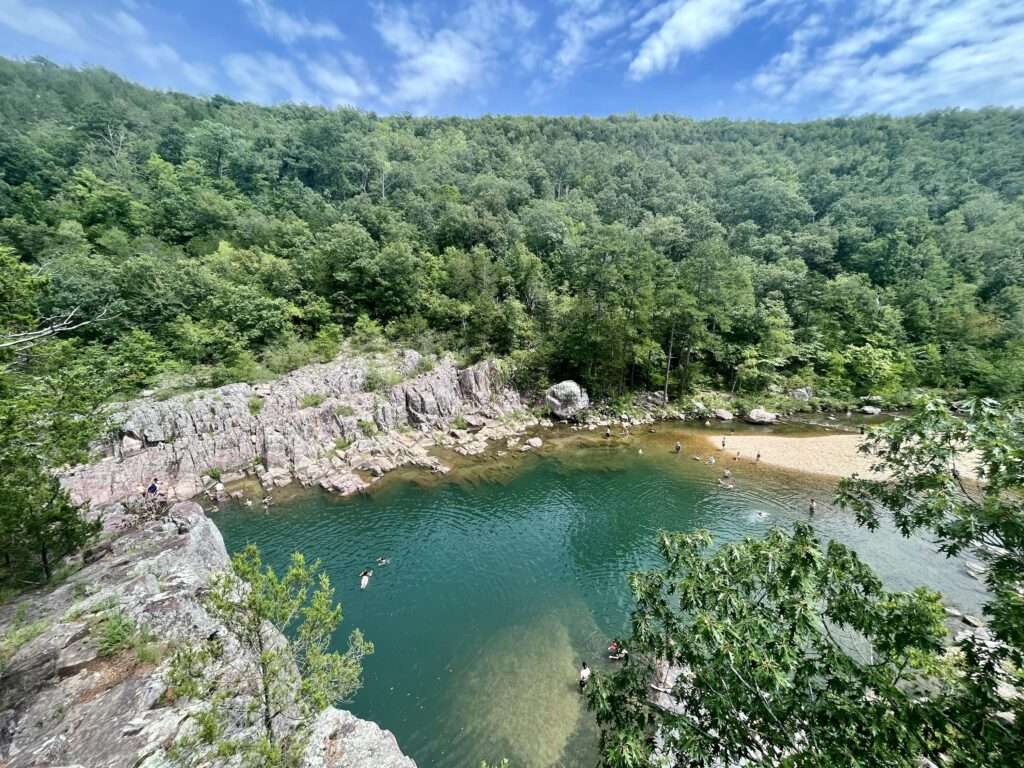
Johnson’s Shut-Ins State Park in Missouri is built around a stretch of the East Fork Black River where the water squeezes through ancient igneous rock, carving out natural chutes, potholes, and pools the locals call “shut-ins.” The result is a wild, boulder-strewn water park shaped entirely by geology, where you can slide through narrow rock channels and drop into calm basins between them. It’s one of the most distinctive swimming holes in the Midwest, and the billion-year-old rhyolite rock underfoot is older than almost anything else you’ll stand on in the country.
What to Pack for Johnson’s Shut-Ins
- Swim shirt — a fitted top adds a layer of protection against the rough volcanic rock.
- Waterproof seat cover — spares your car from a soaked drive home after a day in the shut-ins.
- Collapsible water jug — refills are scarce, so hauling your own water pays off.
- KALIYADI Polarized Sunglasses — polarized lenses with full UV protection that cut the harsh glare bouncing off the water and the pale rock.
10. Meadow Run Waterslide, Pennsylvania
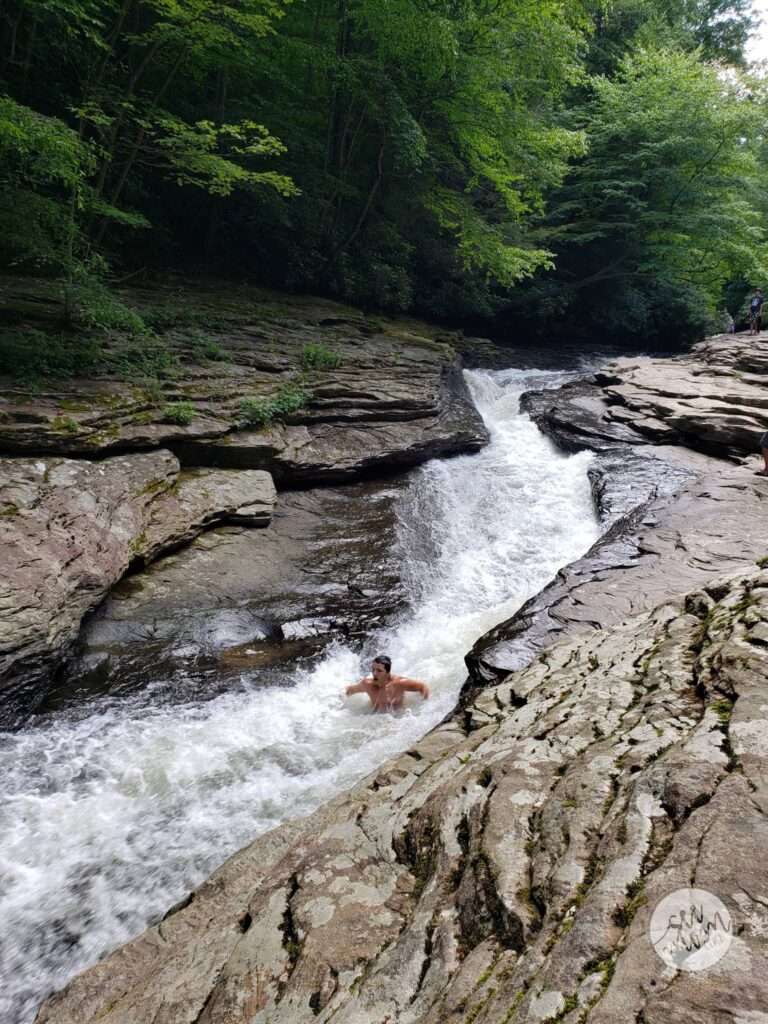
The Meadow Run Natural Waterslide in Ohiopyle State Park, Pennsylvania is a long ribbon of smooth sandstone that the creek has polished into a working rock slide you ride on nothing but the seat of your shorts. The current does the work, carrying you down a 30-plus-foot chute into a shallow pool at the bottom, and the whole thing is free, unsupervised, and a rite of passage for anyone who grew up near the Laurel Highlands. The rock is slick and the ride is faster than it looks, so watching a few runs before your first go is genuinely good advice rather than a formality.
What to Pack for Meadow Run Waterslide
- Beach blanket — a spot on the rocks to dry off and watch the next round of sliders.
- Hydration backpack — keeps your hands free on the short walk in and your water close by.
- Mineral sunscreen stick — quick to reapply between runs without greasing up your hands.
- Bose SoundLink Micro (2nd Gen) — IP67 waterproof with up to 12 hours of battery, small enough to clip to a bag and loud enough to run the whole afternoon on the rocks.
As an Amazon Associate, I earn from qualifying purchases.