




Italy’s coastline stretches for more than 2,900 miles, and somehow, every summer, the same dozen towns get absolutely buried under selfie sticks and tour buses. The good news is that the country is hiding a long list of seaside places where the beaches are just as beautiful, the food is dramatically better, and the person taking the table next to you at dinner is actually Italian.
These 10 Underrated Italian Coastal Towns earned their spots here not because they’re unknown to Italians — locals have been going to all of them for decades — but because international tourism hasn’t fully caught on yet, which means you can still show up in July and find an empty patch of sand.
1. Tropea, Calabria
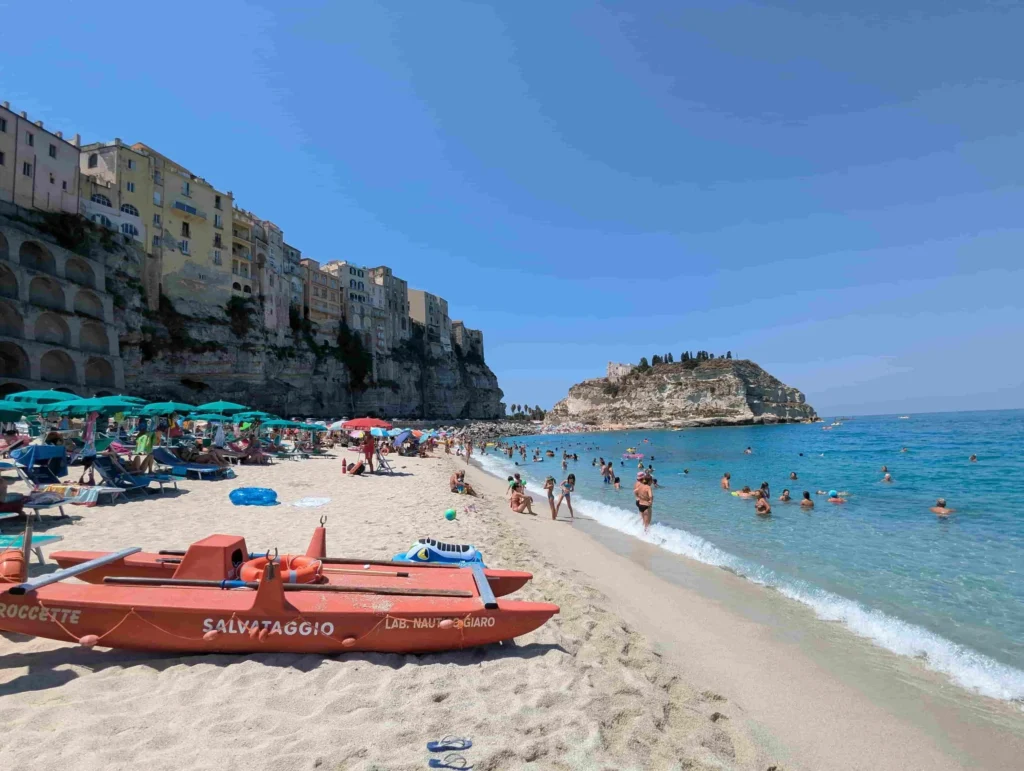
Tropea sits on a cliff above the Tyrrhenian Sea in Calabria’s toe, and the view from the top — white buildings stacked above turquoise water with a medieval church perched on a sea stack — is genuinely one of the most dramatic coastal scenes in the country. The red onion of Tropea (cipolla rossa di Tropea) has protected IGP status, and you’ll find it in everything from focaccia to jam to a sweet-savory bruschetta that sounds wrong until you eat it. The water here, specifically at Spiaggia di Capo Vaticano a short drive south, runs the kind of Caribbean-blue that makes people accuse you of editing your photos when you post them.
What to Pack for Tropea:
- Water shoes for rocky cliff beaches
- Polarized sunglasses
- Reef-safe sunscreen
- Waterproof phone pouch
- Snorkel set for adults
Disclosure: This post contains affiliate links. As an Amazon Associate, I earn from qualifying purchases at no extra cost to you.
2. Otranto, Puglia
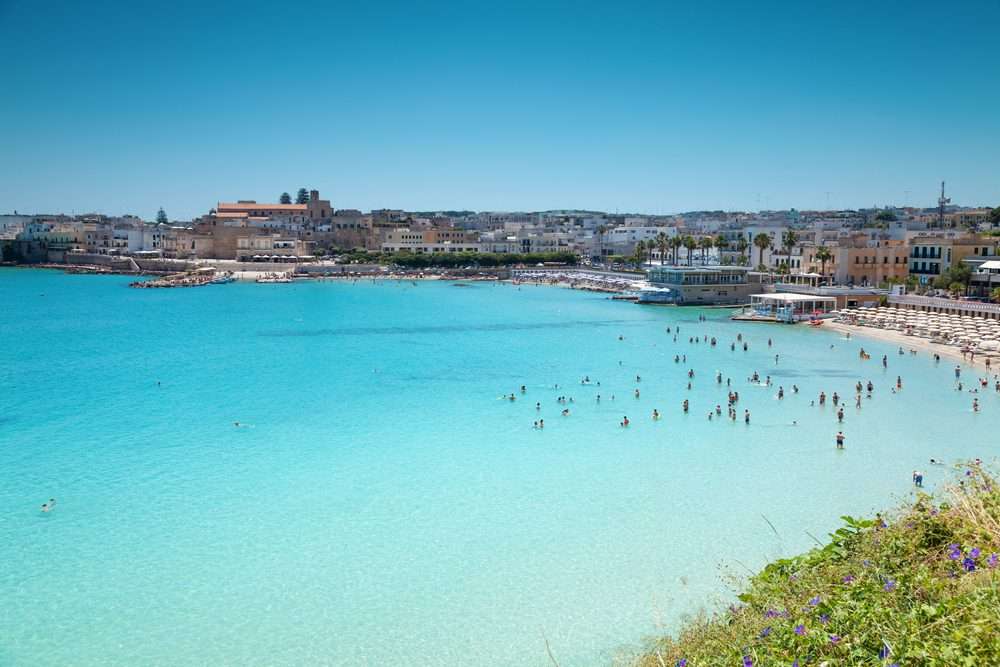
Otranto is the easternmost city in Italy, which means it catches the Adriatic light differently than anywhere else on the coast — the mornings here have a clarity that photographers specifically seek out. The old town is wrapped in walls built by the Aragonese in the 15th century, and inside the cathedral you’ll find a massive mosaic floor depicting a Tree of Life that’s been drawing visitors since 1163, long before travel blogs existed. The beaches at Baia dei Turchi and Alimini are backed by pine forests, the water is flat and shallow enough for kids, and a plate of spaghetti alle cozze at any of the harbor restaurants costs less than you’d expect for a place this beautiful.
What to Pack for Otranto:
- Lightweight linen pants for sightseeing
- Packable beach tote bag
- Comfortable travel sandals
- Portable waterproof beach blanket
3. Procida, Campania
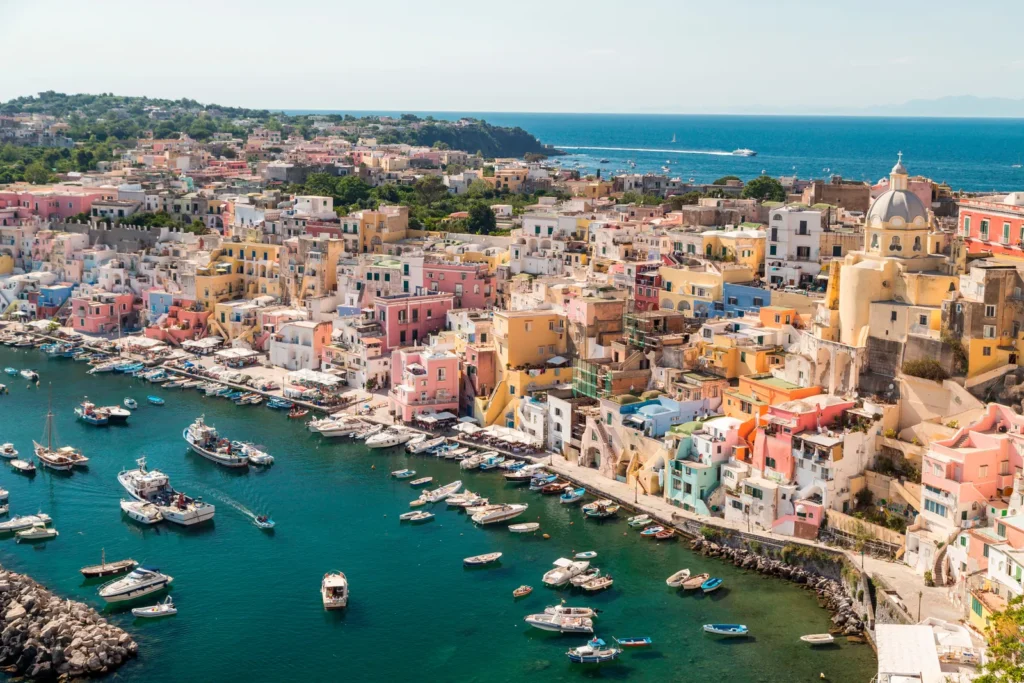
Procida is the smallest of the islands in the Gulf of Naples, and it was named Italy’s Capital of Culture in 2022, which was the moment the world finally started paying attention to what Neapolitans have known forever. The harbor at Marina Corricella — stacked fishing houses in faded yellow, pink, and orange — is the kind of place that looks impossibly photogenic and then turns out to be even better in person, where you can smell the catch being unloaded and hear the boats knocking against the dock. The local specialty is lingua di bue (a ricotta-filled pastry shaped like a tongue), the limoncello is made from the island’s own lemons, and the beach at Chiaiolella is one of the calmest and least discovered in the entire Campania region.
What to Pack for Procida:
- Motion sickness patches for ferry rides
- Packable lightweight day backpack
- Waterproof action camera
- Wide brim travel sun hat
- Dry bag waterproof beach bag
4. Sperlonga, Lazio
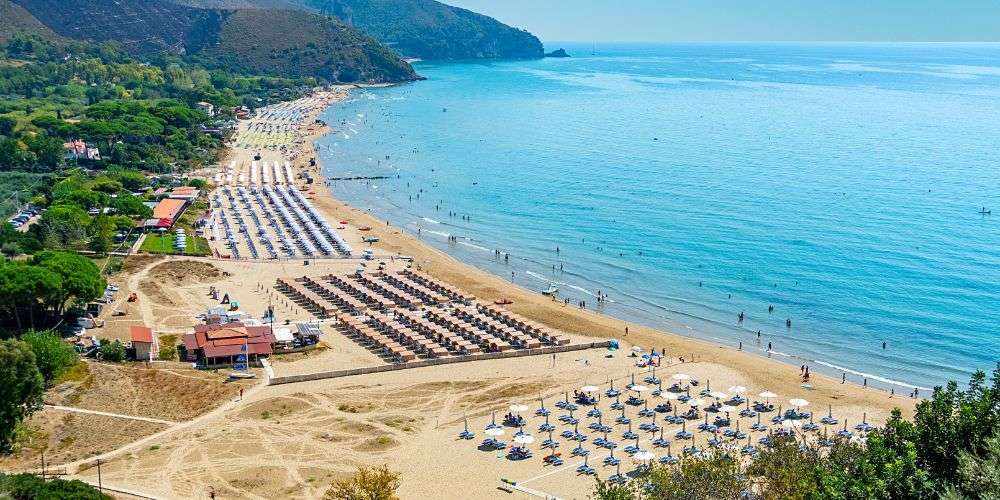
Sperlonga is a whitewashed medieval village built on a promontory between Rome and Naples, and it’s the kind of place Romans have been sneaking off to for decades while keeping it deliberately quiet from everyone else. The Spiaggia di Sperlonga stretches for several miles of fine white sand with exceptionally clean water, and because the town itself sits uphill, the beach below retains a relaxed, uncluttered feel compared to anything closer to Rome. The restaurants on the main street serve grilled sea bass with local capers, freshly made tagliolini al granchio, and a local white wine from the Fondi hills that pairs with all of it better than anything on a wine list would suggest.
What to Pack for Sperlonga:
- Beach umbrella with sand anchor
- Lightweight portable beach chair
- Lightweight beach cover up dress
- Reef-safe sunscreen SPF 50
Disclosure: This post contains affiliate links. As an Amazon Associate, I earn from qualifying purchases at no extra cost to you.
5. Maratea, Basilicata
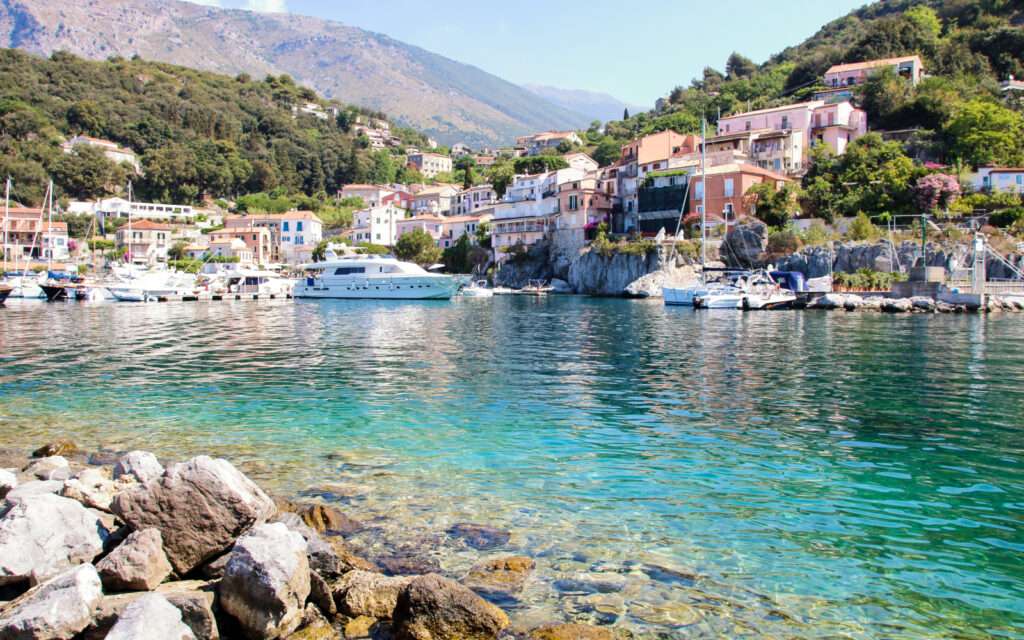
Maratea sits on a stretch of coast in Basilicata that somehow never made it onto the standard Italy itinerary, which is both its greatest flaw and its greatest asset. The coastline here is dramatic — 29 beaches carved into limestone cliffs, sea caves you can swim into, and water that shifts from emerald to deep cobalt depending on the depth — and the town above is anchored by a 145-foot statue of Christ the Redeemer that predates the more famous one in Rio by several years. The food scene leans heavily on Lucanian traditions blended with fresh seafood: try ‘nduja-spiced mussels, the local pesce spada (swordfish) preparations, and a glass of Aglianico del Vulture, Basilicata’s excellent red that somehow doesn’t get the recognition it deserves.
What to Pack for Maratea:
- Snorkel set for sea cave swimming
- Underwater camera for sea caves
- Water shoes non-slip cliff beach
- Waterproof dry bag 20L
- Packable rain jacket lightweight
6. Scilla, Calabria
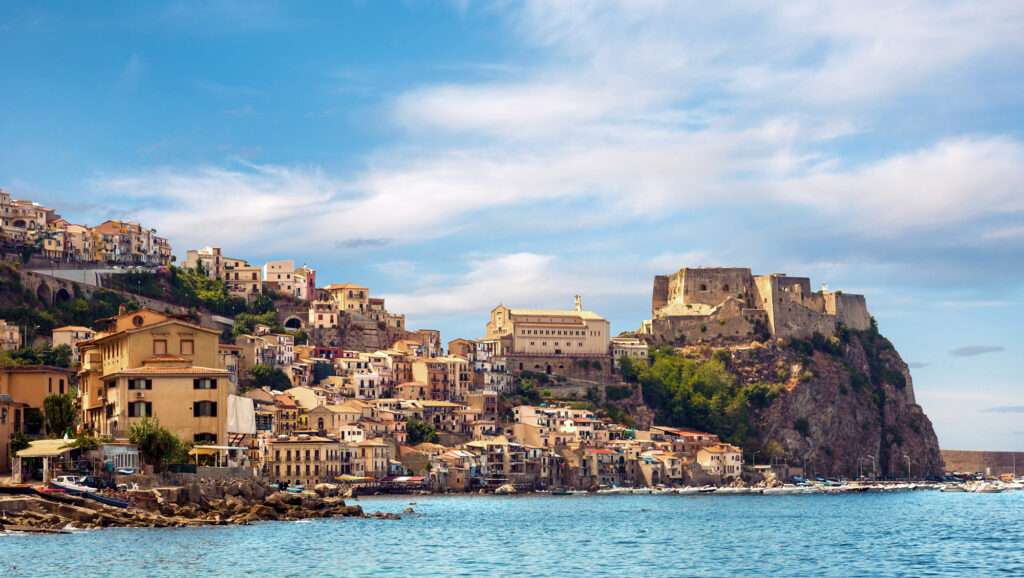
Scilla is the fishing village in Calabria’s toe that Homer wrote into the Odyssey as one of the twin sea monsters, and while the mythology is a stretch, the scenery absolutely earns its legendary reputation. The village is split into two parts — the borgo di Chianalea, where the fishing houses are built directly over the water with boats tied at what function as front doors, and the upper town with views across to Sicily just 10 miles across the Strait of Messina — and together they form one of the most unusual and photogenic coastal landscapes in southern Italy. Scilla is famous throughout Calabria for its pesce spada (swordfish) season, and the local trattorias serve it grilled, in pasta, and in a traditional preparation with cherry tomatoes, olives, and capers that’s been unchanged for generations.
What to Pack for Scilla:
- Travel mirrorless camera
- Polarized fishing sunglasses men
- Lightweight travel backpack 30L
- Non-slip water sandals
7. Numana, Le Marche
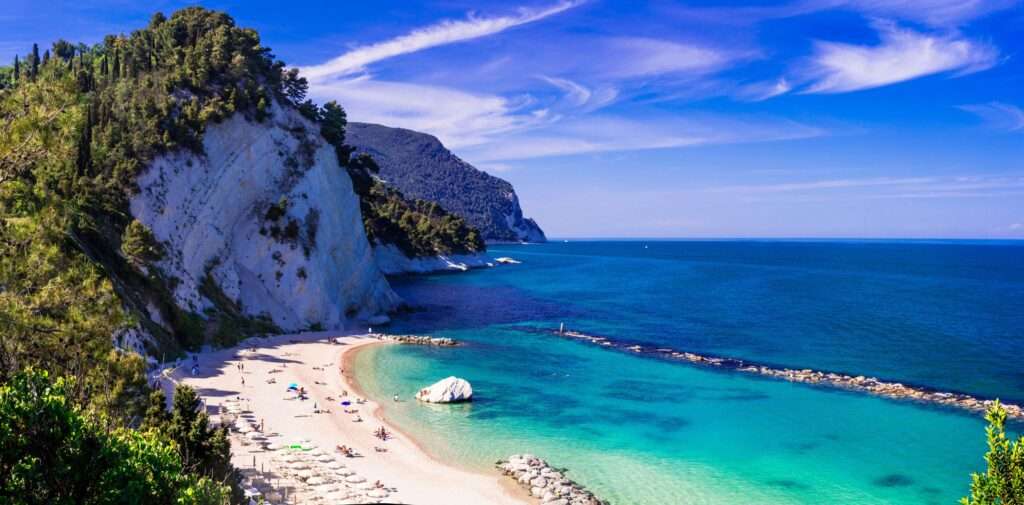
Numana is a small town on the Riviera del Conero in Le Marche, sitting just below the dramatic Monte Conero headland on the Adriatic, and it represents a version of the Italian beach vacation that most international visitors never find. The Spiaggia di Numana Bassa is a fine-gravel beach with water clear enough to see the bottom at 16 feet, flanked by white chalk cliffs that rise to nearly 1,800 feet above sea level, and accessible enough that you can walk there from the old town without needing a boat or a shuttle. The regional food tradition here leans heavily on vincisgrassi (a rich baked pasta unique to Le Marche), fresh Adriatic clams, and the local Verdicchio dei Castelli di Jesi white wine, which is criminally underpriced for how good it is.
What to Pack for Numana:
- Water shoes for gravel beach
- Snorkel mask set clear water
- Waterproof dry bag for cliffs
- Sand free beach blanket
- Reef-safe mineral sunscreen
8. Gallipoli, Puglia
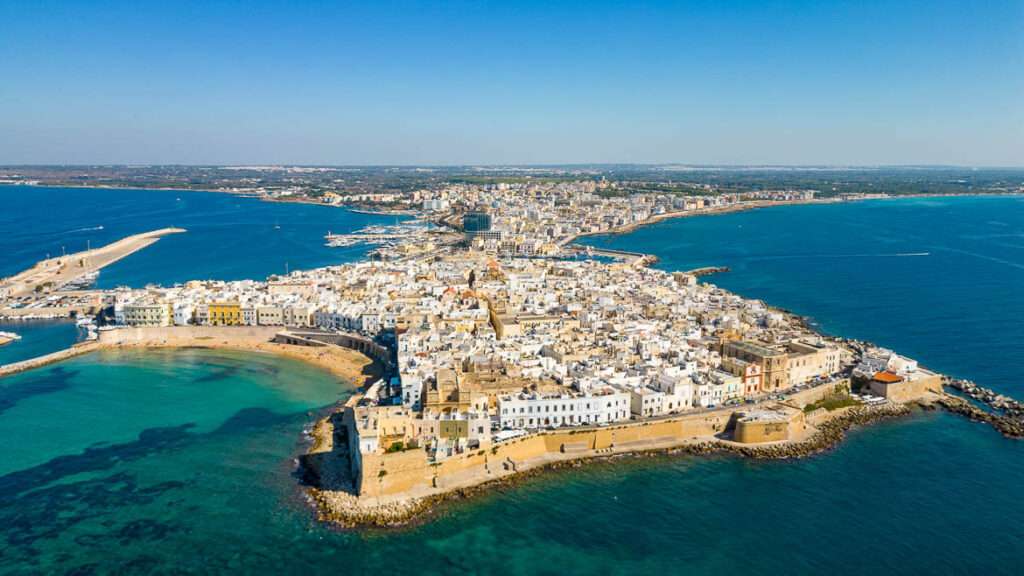
Not the Turkish one — Gallipoli in Puglia is a Greek-founded port city on the Ionian coast with an old town built on an island connected to the mainland by a 17th-century bridge, and the contrast between its baroque churches and the turquoise water surrounding them on three sides is hard to overstate. The beaches south of town, particularly Baia Verde and Punta della Suina, are some of the finest on the entire Salento peninsula — long stretches of fine white sand with shallow, warm water that heats up early in the season and stays that way well into October. The local fritto misto (fried mixed seafood) here is made fresh to order using whatever was pulled from the harbor that morning, and the pasticciotto — a short-crust pastry filled with custard cream — is the breakfast Gallipoli locals would defend in a debate against anyone.
What to Pack for Gallipoli:
- Beach tent sun shelter UPF 50
- Portable beach umbrella lightweight
- Insulated beach cooler bag
- Waterproof travel sandals
- Kids beach toy set
9. Cefalù, Sicily
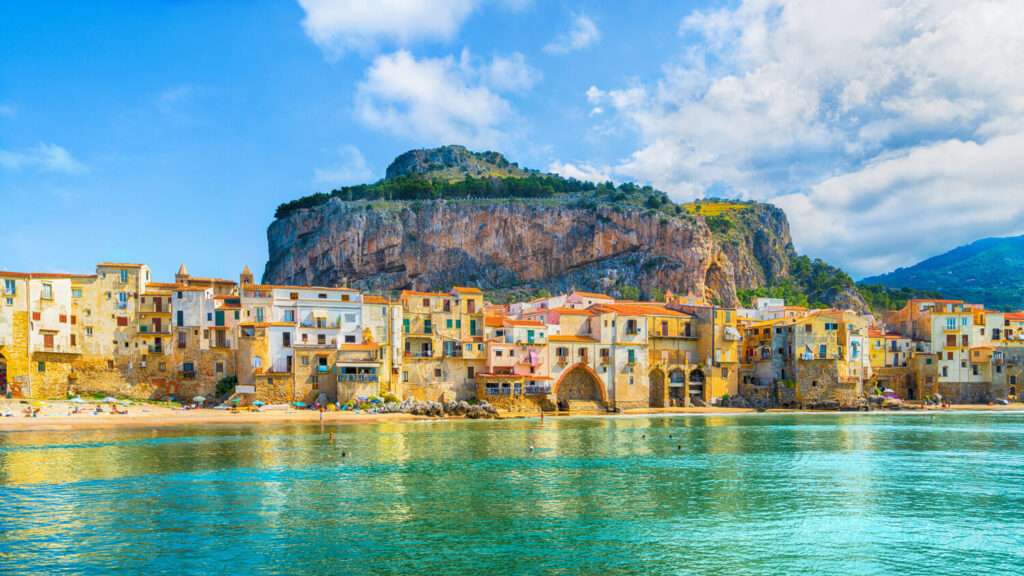
Cefalù is a Norman-Arab-Byzantine town on Sicily’s northern coast, bookended by a massive limestone crag called La Rocca — rising 885 feet above sea level — on one side and a beach that would be the most famous in Italy if it were two hours closer to Rome. The Duomo di Cefalù, started in 1131 by Roger II, contains some of the finest Byzantine mosaics outside of Istanbul, and the contrast of standing in a 900-year-old cathedral and then walking three minutes to put your feet in the Mediterranean is the specific kind of thing that makes Sicily feel so genuinely disorienting. The food here pulls from both Arab and Norman culinary traditions: pasta con le sarde (sardines, pine nuts, raisins, saffron), fresh tuna carpaccio, and cannolo made with sheep’s milk ricotta from the Madonie mountains directly behind the town.
What to Pack for Cefalù:
- Compact travel camera with zoom
- Lightweight linen shirt men women
- Comfortable walking sandals arch support
- Portable power bank charger
10. Vietri sul Mare, Campania
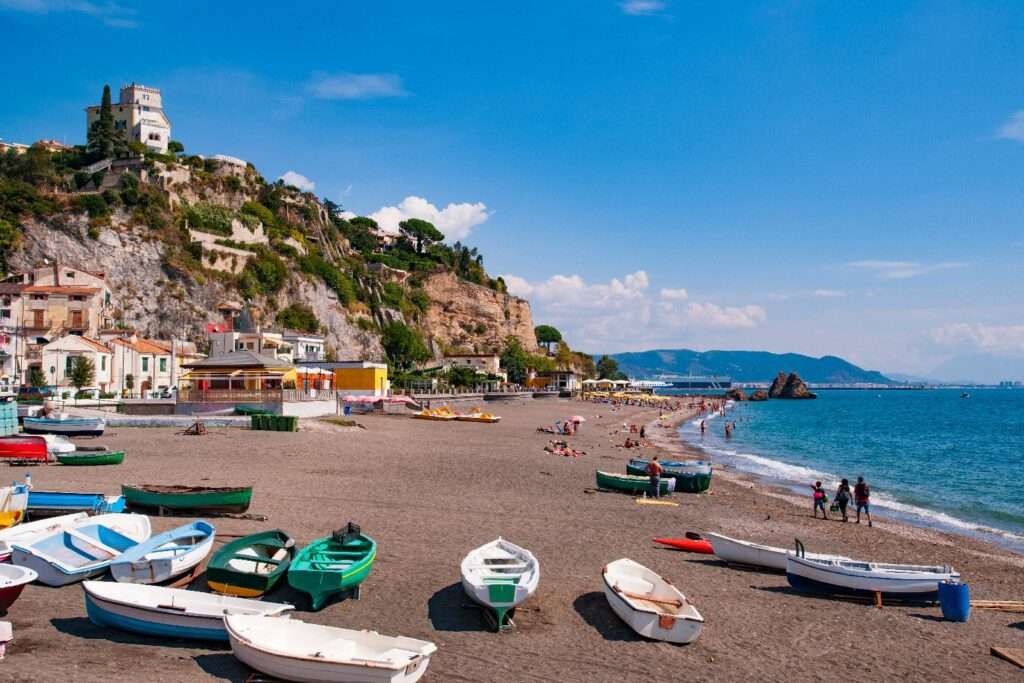
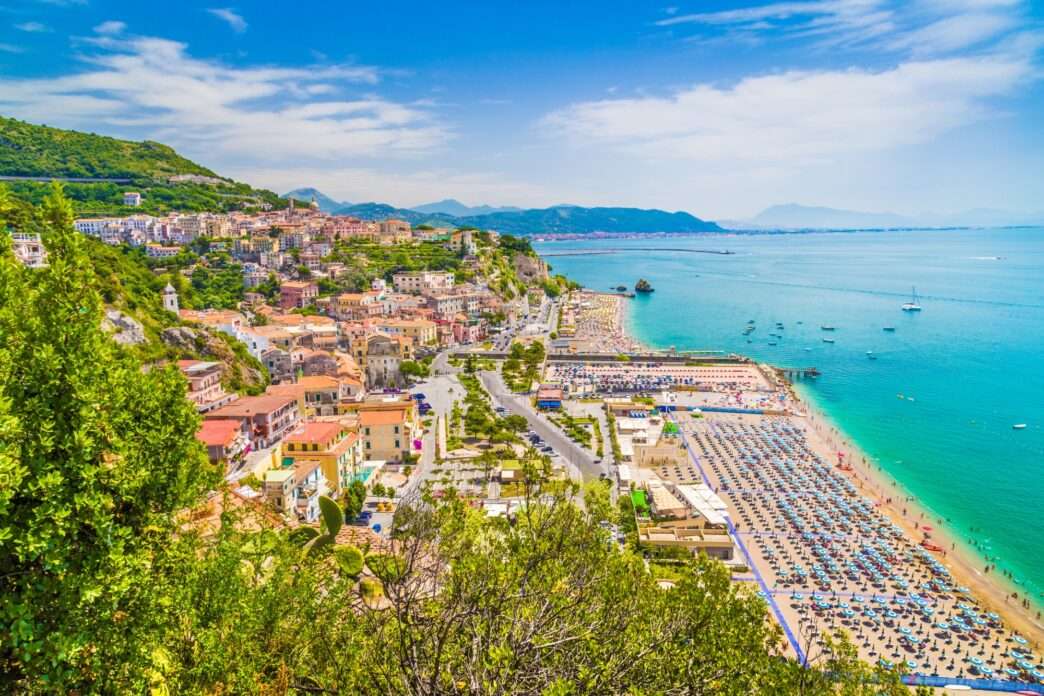
Vietri sul Mare sits at the very beginning of the Amalfi Drive from the Salerno end, which means it technically is on the Amalfi Coast but catches almost none of the traffic — most tourists blow through it in a rental car without stopping, which is their loss and your opportunity. The town has been the center of Italian hand-painted ceramic production since the 16th century, and the main streets are lined with workshops where you can watch pieces being painted, then buy them directly without a retail markup. The beach at Marina di Vietri is a broad public beach with good swimming, backed by a promenade of seafood restaurants serving pasta ai frutti di mare and alici fritte (fried anchovies) that are the Campanian version of fast food — cheap, fresh, and genuinely excellent.
What to Pack for Vietri sul Mare:
- Protective bubble wrap bags for fragile souvenirs
- Large capacity travel tote bag
- Comfortable walking sandals cobblestone
- Lightweight beach cover up
- SPF 50 sunscreen daily face
Disclosure: This post contains affiliate links. As an Amazon Associate, I earn from qualifying purchases at no extra cost to you.